© Remstal Tourismus, Foto: Werner Bader
What Is Ice Wine?
Germany’s Rare Frozen Treasure
10.11.202610 min. read timeby Hirsch & Greif
Ice wine is one of the finest sweet wines. Discover how it is made at -7°C, its flavours, grape varieties and Baden-Württemberg’s ice wine regions.
Ice wine is a premium Prädikat wine under German wine law, made from grapes that have frozen naturally on the vine. They must be harvested at a temperature of at least -7°C and pressed while still frozen. The water in the grapes remains behind as ice, producing an exceptionally concentrated, sweet must with intense fruit flavours, vibrant acidity and excellent ageing potential. As the necessary frosty conditions are increasingly rare, ice wine is one of Germany’s most exclusive wine specialities.Ice wine is also one of the world’s most labour-intensive wines. Winegrowers take an exceptionally high risk: if temperatures do not fall to at least -7°C, the grapes reserved for ice wine may be lost entirely. This uncertainty makes every successful ice wine harvest a rare event – and every vintage a precious rarity.
© Durbacher WG
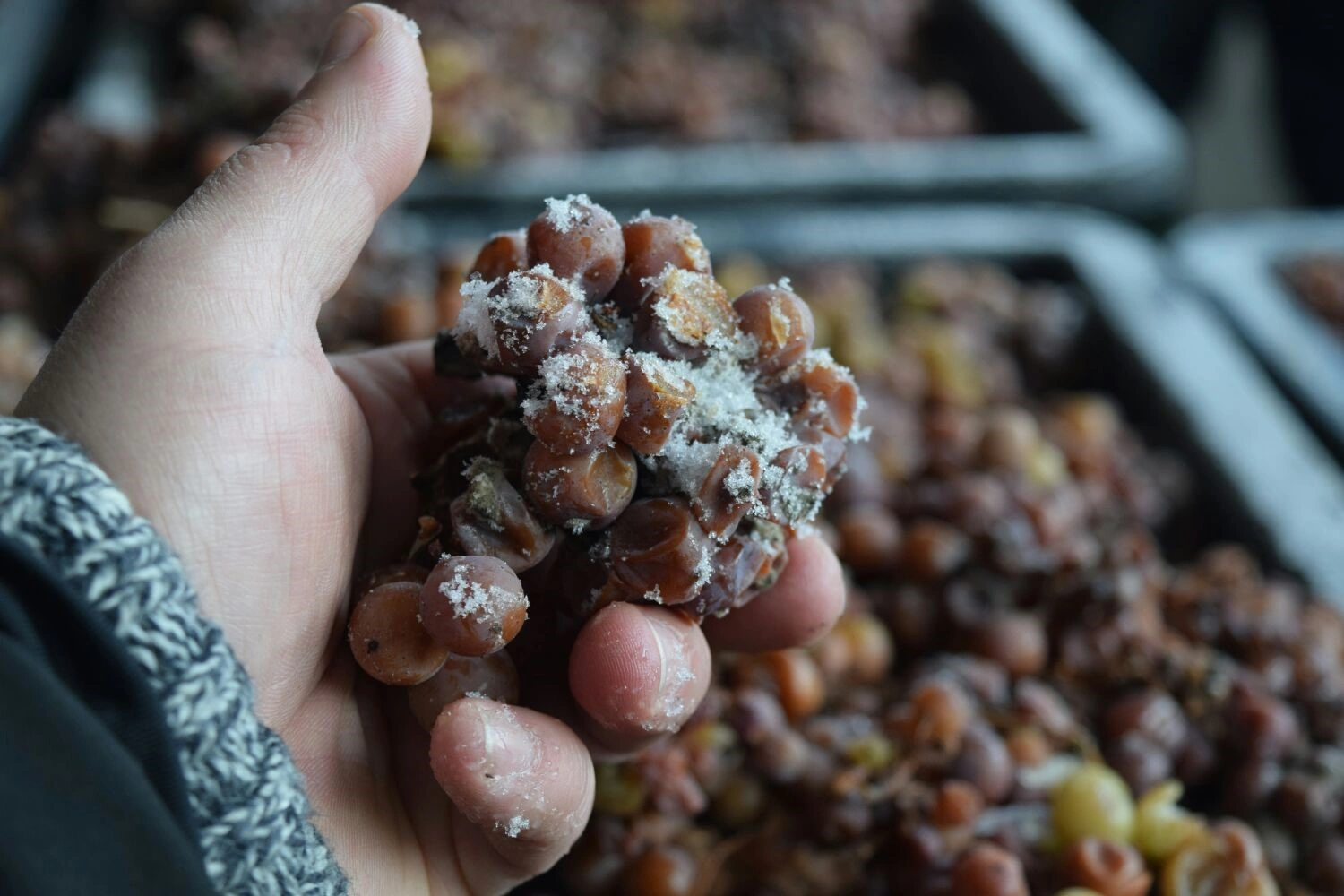
Frozen Grapes
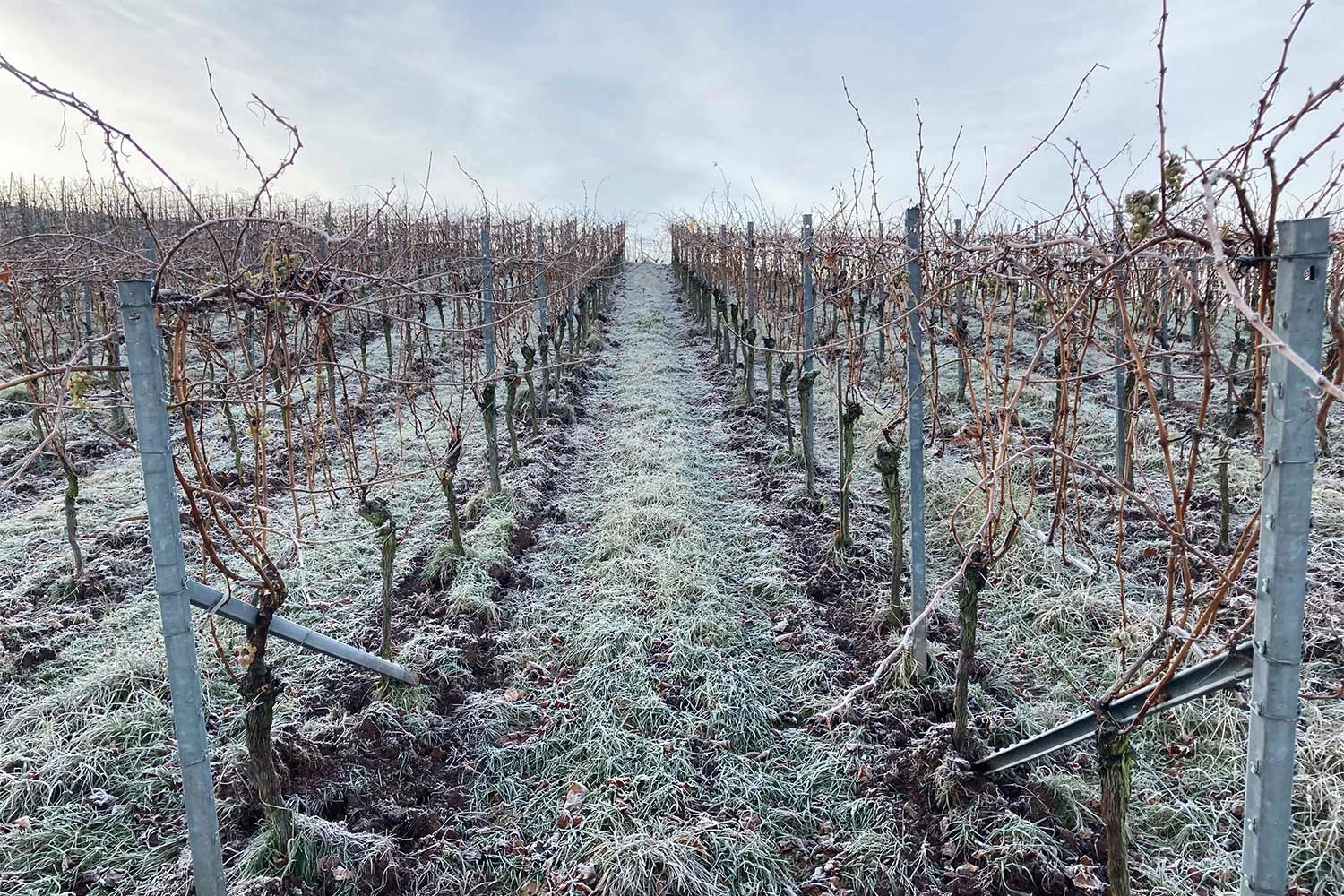
Only healthy grapes that have frozen naturally on the vine are used to make ice wine.
Ice Wine Essentials at a Glance
In a Nutshell
1
Serving Temperature of Ice Wine
At least -7°C in the early hours of the morning
2
Yield of Ice Wine
Just 5–10 per cent of a normal grape harvest
3
Ice Wine: Quality Over Quantity
Only healthy, frozen grapes are used
4
Ice Wine Must Weight
At least 110° Oechsle, usually considerably higher – a sign of the very highest quality
5
Typical Grape Varieties for Ice Wine
Riesling, Pinot Blanc, Pinot Gris, Pinot Noir
Why Is Ice Wine Becoming Increasingly Rare?
Months of Waiting, One Freezing Night – All or Nothing
Ice wine is far rarer today than it was a few decades ago, mainly because of climate change. Milder winters and fewer freezing nights make it increasingly difficult to produce. The grapes must remain on the vine until winter and can only be harvested once temperatures fall to -7°C or below, making every ice wine harvest a gamble. If temperatures remain too high, the entire crop may be lost. This makes ice wine one of Germany’s rarest wine specialities today.
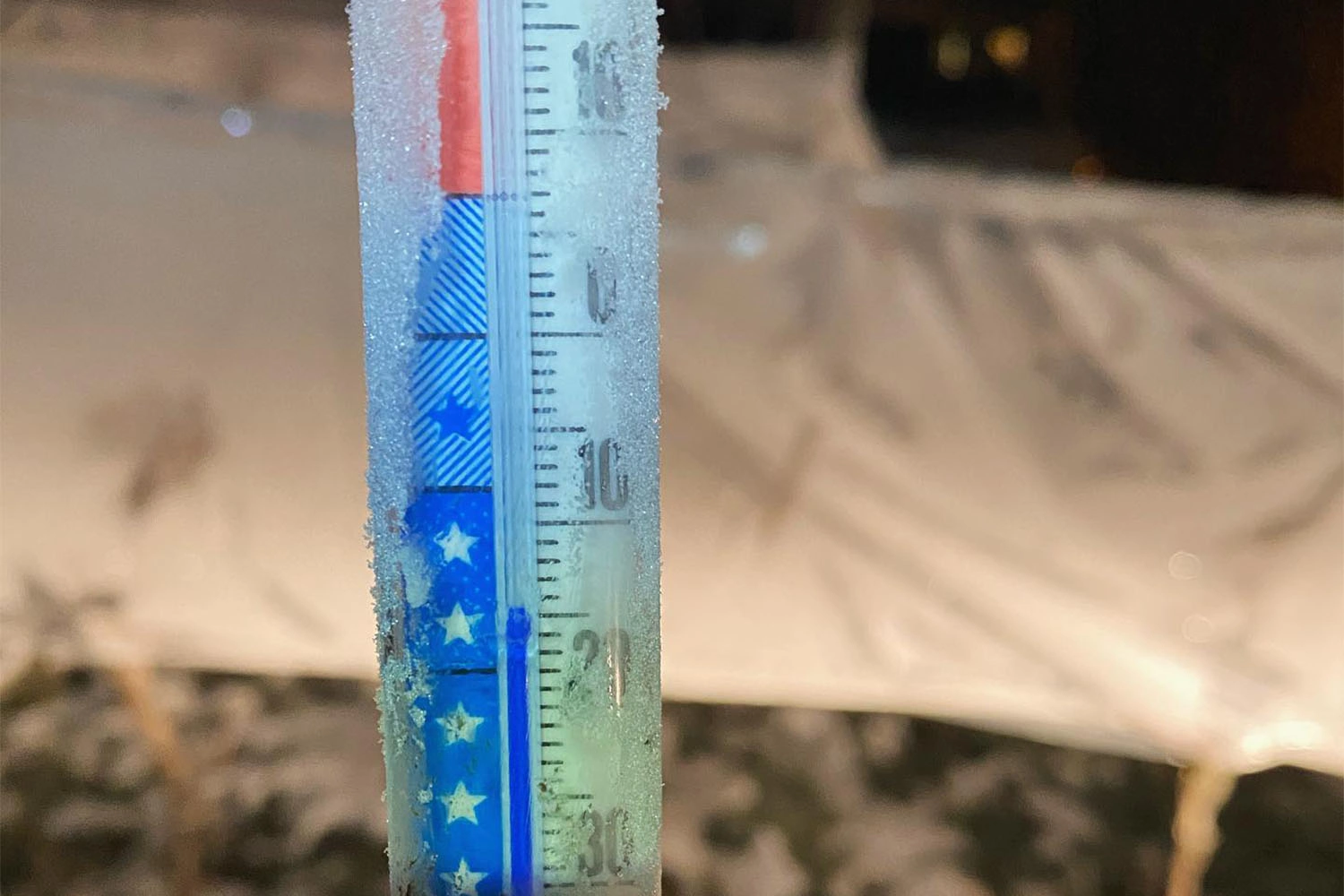
© Weingut Zimmerle
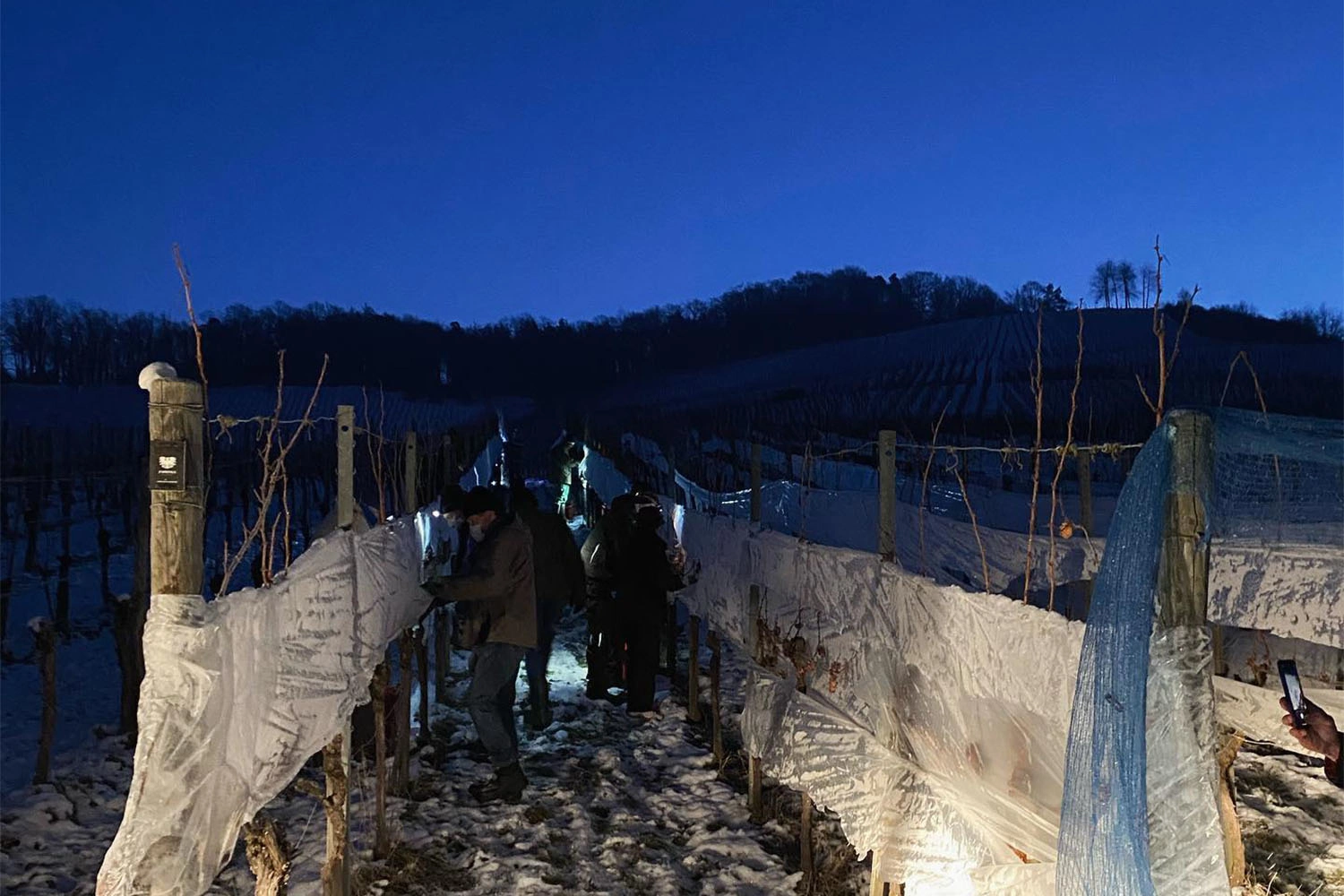
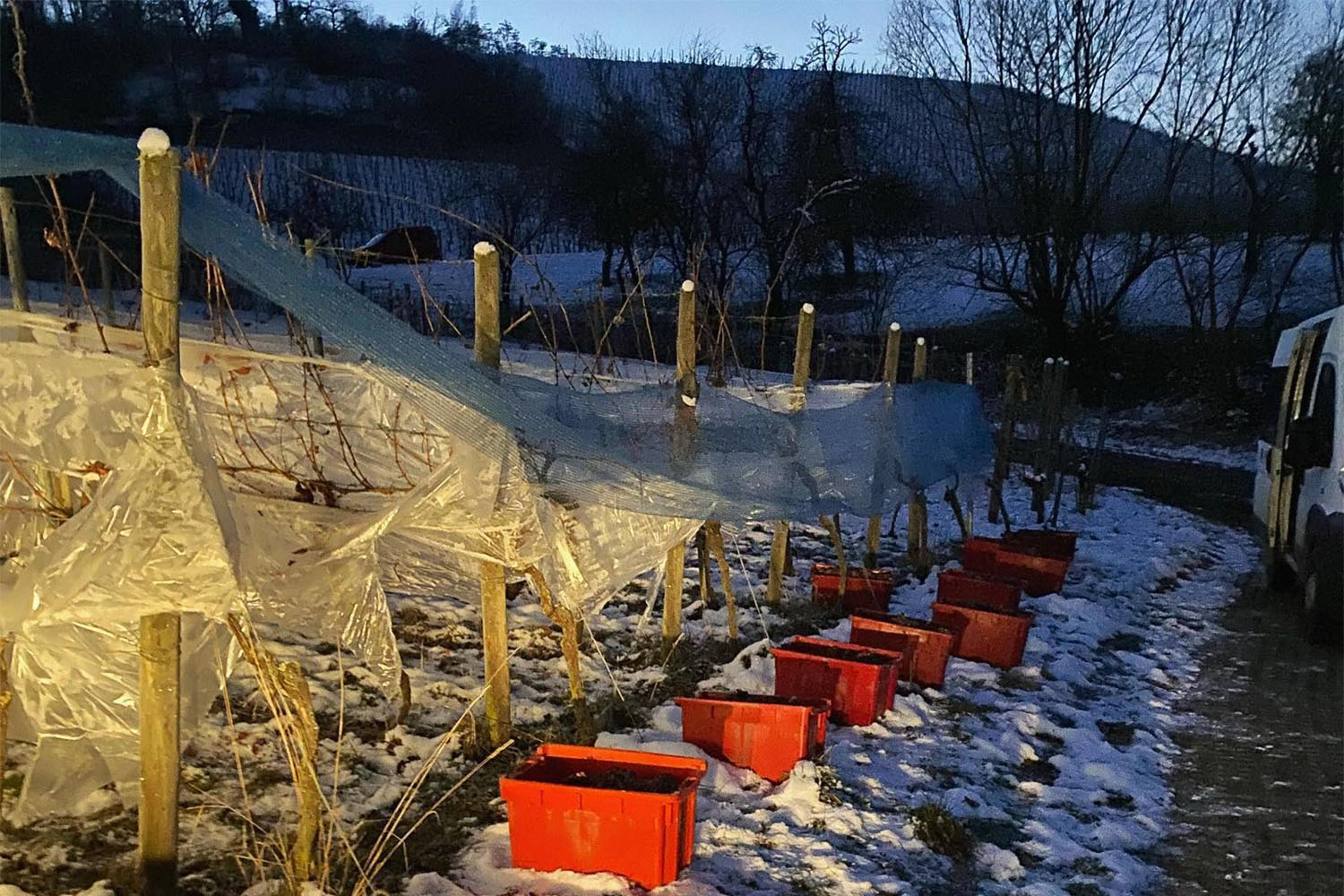
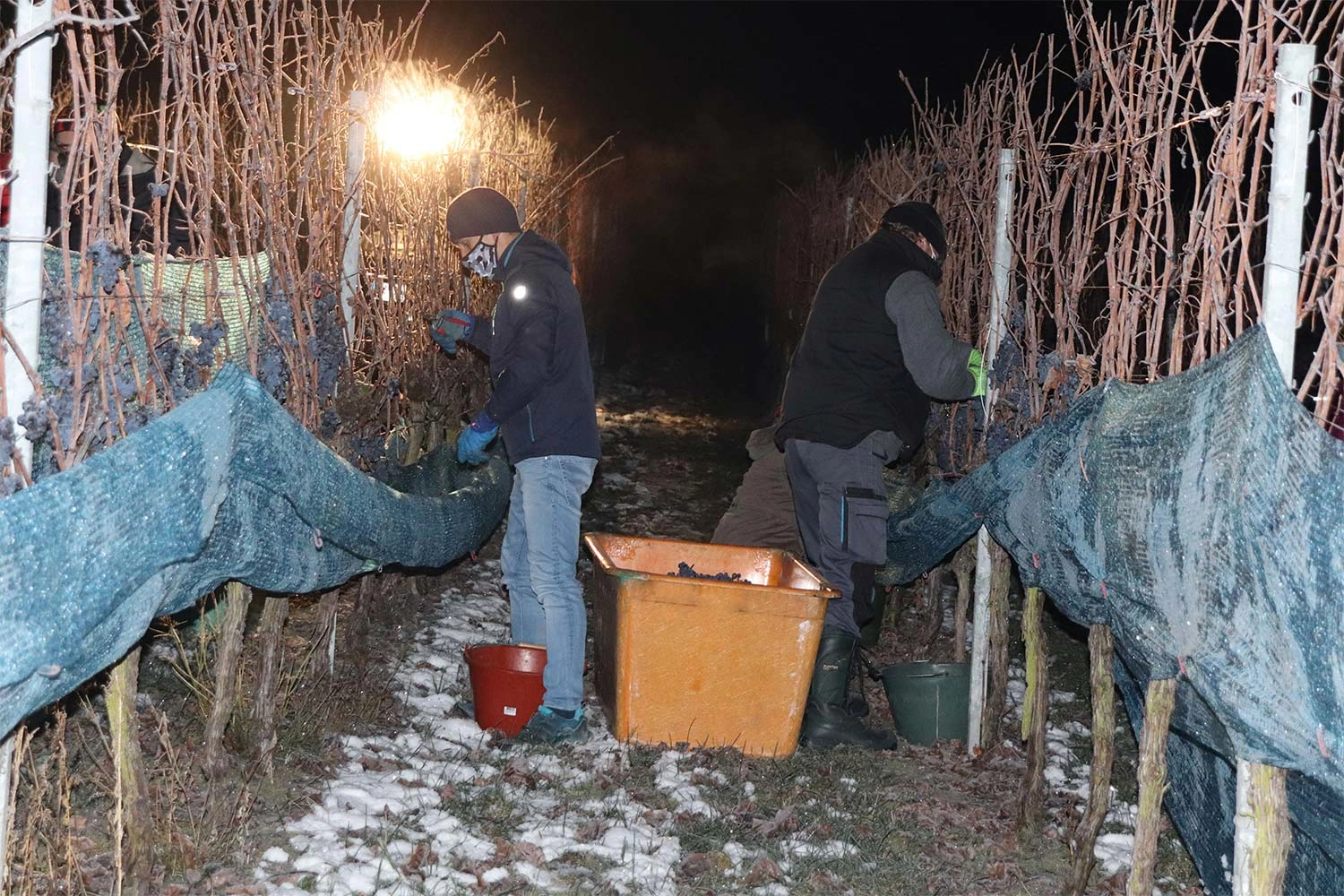
Freezing Temperatures
With temperatures plummeting to -15 °C, the 2021 ice wine harvest begins in the Remstal.
© Weingut Zimmerle
© Weingut Zimmerle
© Fellbacher Weingärtner
SÜDEN FACTSSÜDEN FACTSSÜDEN FACTSSÜDEN FACTSSÜDEN FACTS
Flavour Profile
tropical fruits, honey, apricot, quince, raisins
Mouthfeel
creamy, concentrated, with fresh acidity
Serving temp.
typically 8–10°C
Shelf Life
Very high, often spanning decades
Aroma Match
the perfect accompaniment to cheese and desserts
Availability
very rare, as it is only possible in a few years
What goes well with ice wine?
The best flavour combinations at a glance
Ice wine is one of Germany’s most exclusive sweet wines. Harvesting the grapes while frozen produces a highly concentrated wine with intense aromas of apricot, quince, honey, raisins and tropical fruit. Its characteristic acidity provides freshness and balance.This interplay makes ice wine a highlight of a special menu for many wine lovers. Whether served as the crowning finale to a festive dinner or paired with selected dishes, its versatility never fails to surprise.Ice Wine Pairs Particularly Well With:Fruity desserts, sorbets and delicate frozen creations Blue cheese and mature hard cheeses Crème brûlée, nut-based desserts and fine pastries Festive starters combining sweet and savoury flavours
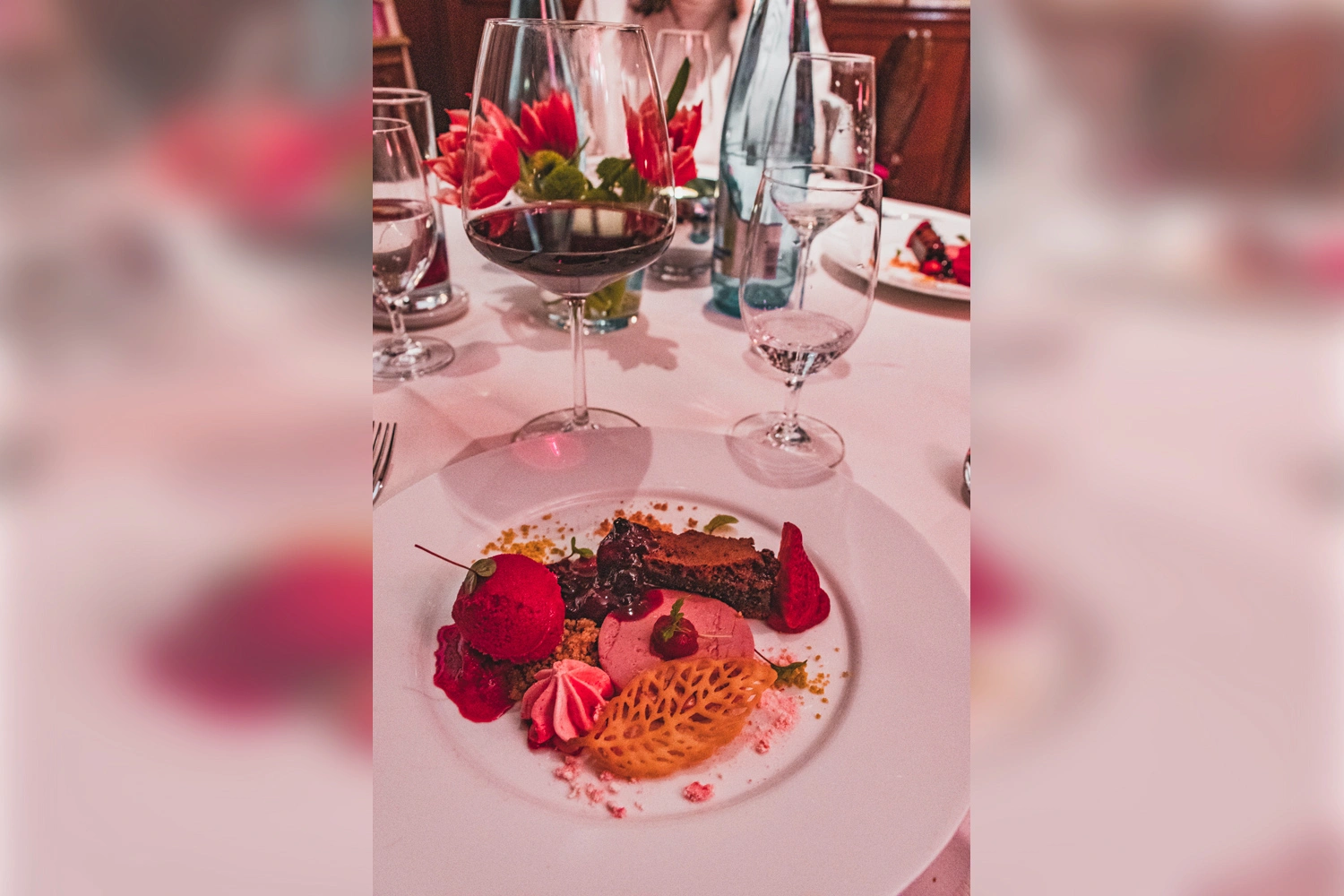
© Sandra Bihlmaier
Bewertung der Speisenkombination
This selection of red desserts pairs well with a Pinot Noir ice wine.
How to taste Eiswein properly
From the first whiff to the very last drop
Ice wine reveals its full aromatic complexity when tasted mindfully, with aroma, colour and flavour all playing an important role. Typical notes include tropical fruit, honey, apricot, quince and candied citrus peel.Sweetness: Intense, but not cloying Acidity: Fresh and balances the sweetness Mouthfeel: Creamy, rich and velvety Finish: How long does the flavour linger? It is often exceptionally long in ice wine.
1. Smell: Explore the Aromas
First smell the wine while the glass is still, then gently swirl it and smell again. Look for fruity, honeyed or spicy notes. Typical aromas: tropical fruit such as mango and pineapple, honey, dried apricot, quince, raisins and candied citrus peel.Ask yourself: Which fruit do I notice first? Are there any floral or spicy notes?2. Look: Assess the Colour and Viscosity
Depending on the grape variety, ice wine ranges from golden yellow to amber, while red ice wines may have ruby highlights. The ‘tears’ on the inside of the glass indicate its high concentration.Hold the glass up to a bright light or against a white background. Which fruits or foods does the wine’s colour remind you of?Viscosity: ‘Church windows’ or ‘tears’ on the inside of the glass suggest a high sugar content.3. Taste: Sweetness, Acidity and Balance
Take a small sip and let the wine coat your mouth, paying attention to the different flavours. Then try it with small bites of food, such as blue cheese, lemon sorbet or a creamy dessert, and notice how the flavours change.Ice wine typically combines intense sweetness with vibrant acidity and a creamy mouthfeel. High-quality ice wines have a long, lingering finish.Where Ice Wine Is Produced in Baden-Württemberg
Two Wine Regions, Few Freezing Nights and Exceptional Winemaking Skill
The Kaiserstuhl and Remstal are among Baden-Württemberg’s best-known wine regions and produce exceptional ice wines in particularly cold winters. With nights of -7°C or below becoming increasingly rare, every successful ice wine harvest is a remarkable achievement for the winegrowers.

Ice Wine Essentials at a Glance
From Freezing Night to First Sip: Key Questions Answered