UNESCO Caves and Ice Age Art in the Swabian Alb

The Sound of the Ice Age
16.7.20265 min. read time
Spectacular Ice Age discoveries in the Swabian Alb reveal that humans had an appreciation of music as long as 40,000 years ago. We set out to trace the sounds of the Ice Age.

Ice Age Art and Stone Age Music

Sound and Creativity 40,000 Years Ago
Excavation teams have made extraordinary discoveries in caves in the Ach and Lone valleys of the Swabian Alb: figurines dating back around 40,000 years, such as the Venus of Hohle Fels, as well as fragments of flutes made from bone and ivory. They show that Ice Age hunters already had an appreciation of music.
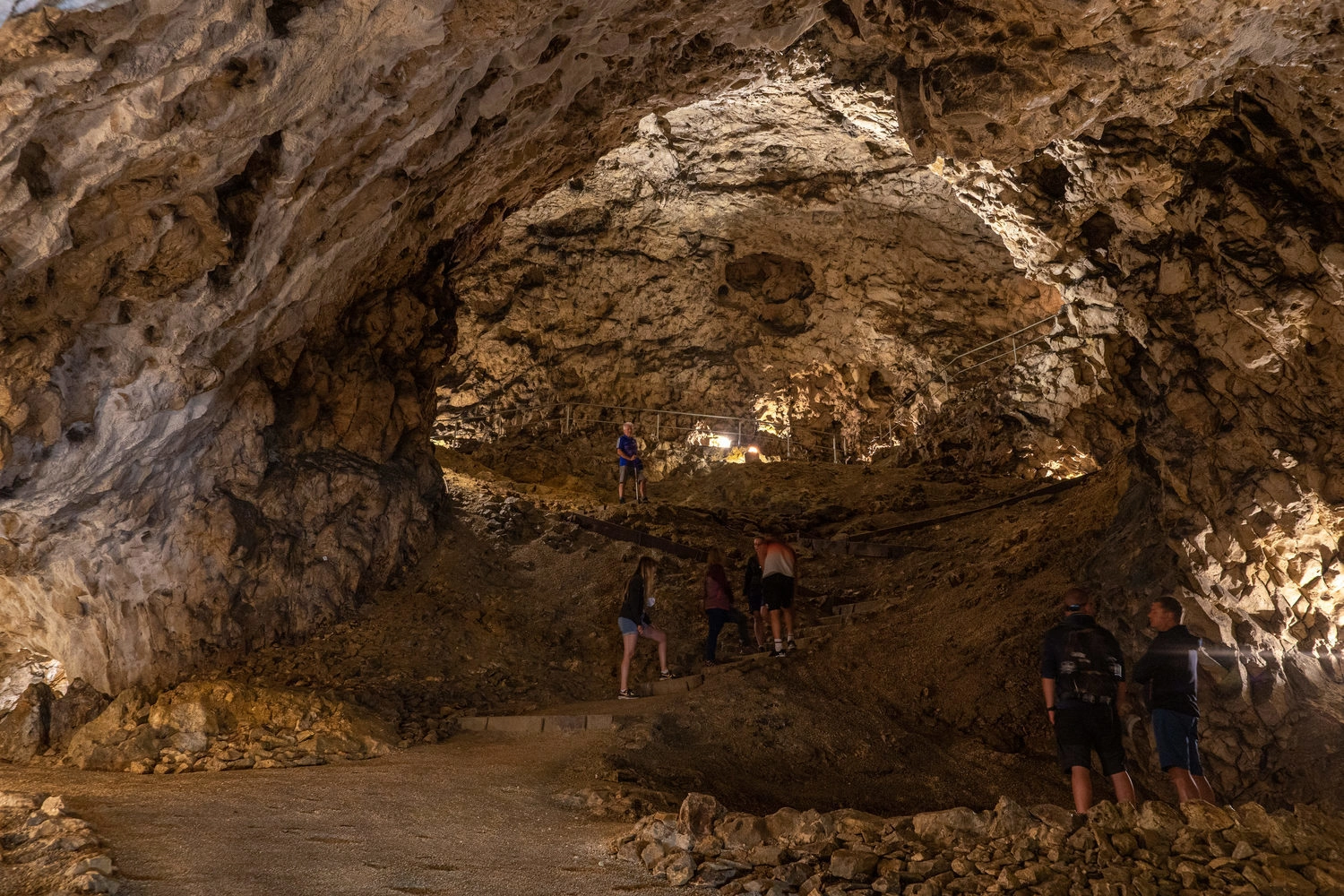
Visitors walk through a tall chamber in a cave.
A cave full of secrets
Some of the most important Ice Age works of art and musical instruments were discovered in Hohle Fels Cave in the Swabian Alb.

Flutes Made from Mammoth Ivory and Bird Bone

Melodies from Another World
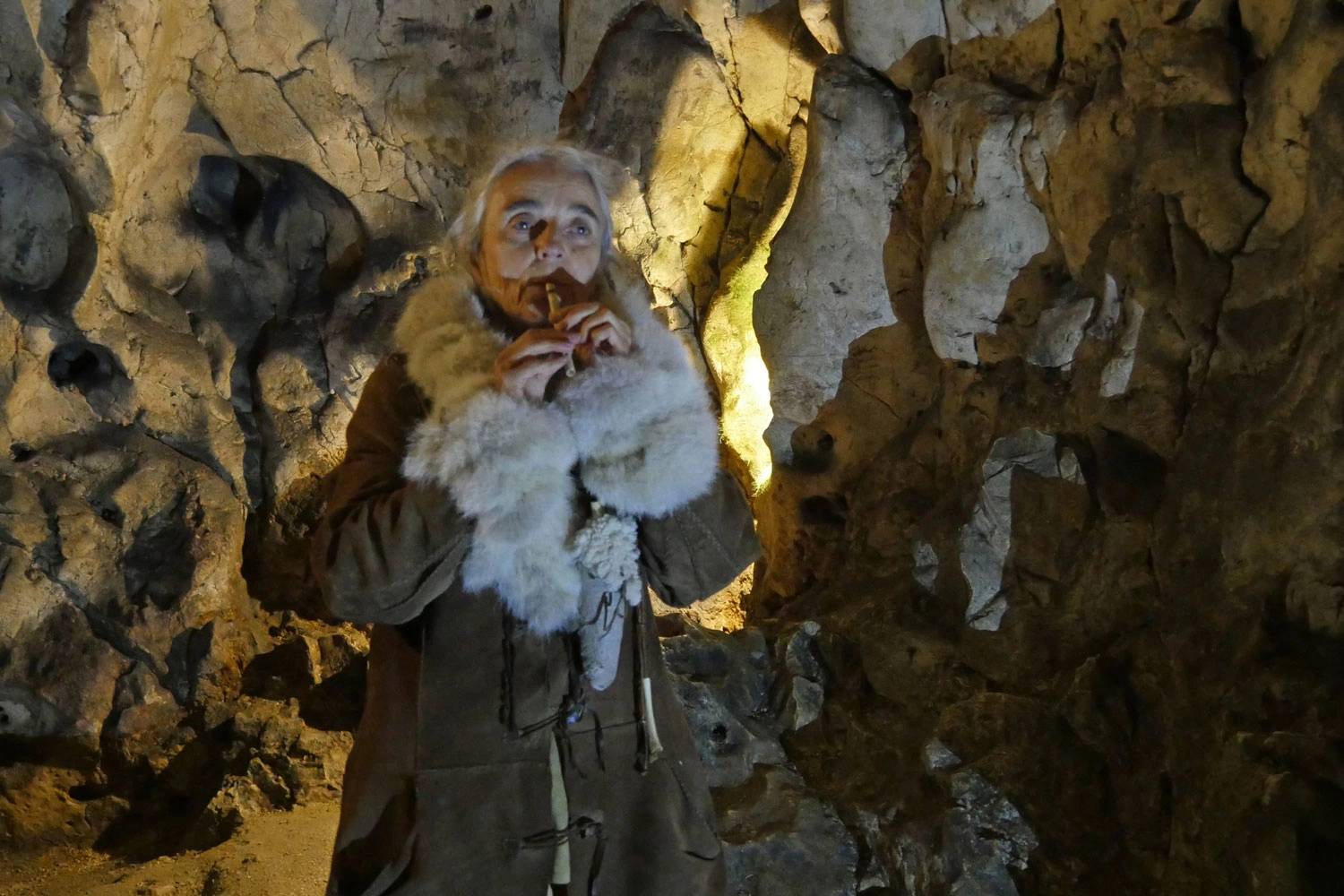
A clear, delicate note fills the chamber, reaching into its furthest corners. Visitors listen in reverent silence to the melody, which lends the impressive cave an even more enchanting atmosphere. It is hard to believe that the slender instrument played by Gabriele Dalferth can produce such volume: her flute is only around 20 centimetres long and very narrow. It is a replica of a Stone Age flute, from a time when people carved instruments like this from bone and mammoth ivory. It is remarkable that the musician can fill the entire Hohle Fels Cave near Schelklingen with its sound.The former primary school teacher from Königsbronn taught the flute at a music school. Fascinated by the archaeological discoveries made in her local area, she also completed an archaeological guide training course at the University of Tübingen. When a mammoth carved from ivory and measuring just four centimetres was discovered in Vogelherd Cave in 2006, she was invited to play the flute at its official presentation. Her usual instrument did not seem right for the occasion, so she began exploring the musical heritage of the Stone Age. Today, her Sounds from Prehistory performances are in demand at museums throughout the region. She has also performed at Hohle Fels Cave in the Ach Valley on several occasions.A narrow tunnel leads into Hohle Fels Cave, one of the largest cavernous caves in the Swabian Alb. Its floor space is roughly equivalent to two tennis courts. At 30 metres high, the chamber feels like a dimly lit cathedral. Artificial lighting casts a fascinating play of shadows across its undulating walls. On the opposite side, the cave floor rises steeply. Dressed in a fur jacket and fur shoes, with leather bands in her hair, Gabriele Dalferth stands at the top as if on a balcony and begins to play. No sheet music has survived, of course, so she gives free rein to her imagination. But whenever reliable information is available, she follows it closely. This is true of her replica flutes, all of which she initially recreated using the tools and techniques available at the time. ‘People scraped out the holes using flint blades,’ she explains, turning the instrument in her hand. It is a replica of a flute discovered by an excavation team at Hohle Fels Cave in 2006: an instrument with five finger holes, made from the radius bone of a griffon vulture.
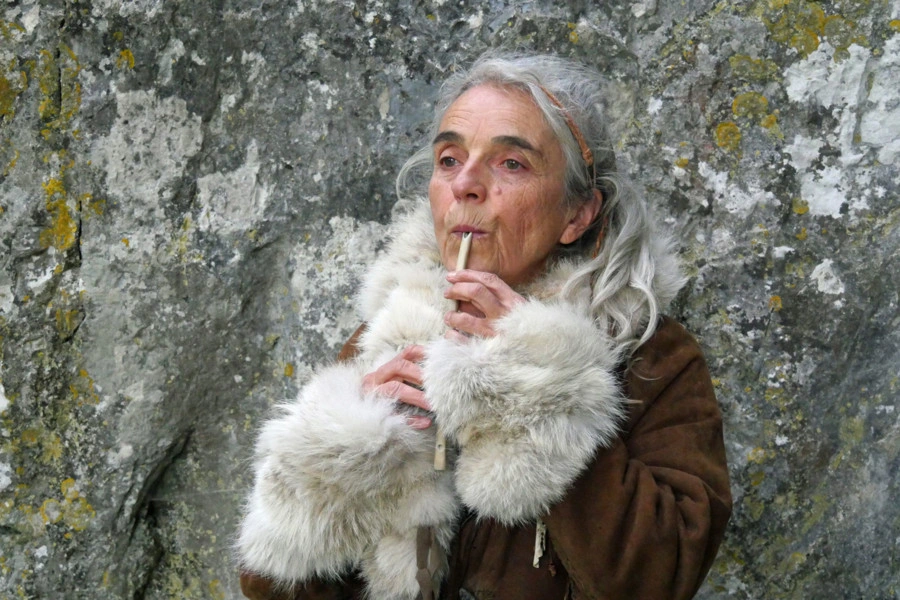
Humanity’s earliest sounds
On an Ice Age flute, Gabriele Dalferth brings to life sounds that may have accompanied people in the Swabian Alb thousands of years ago.
1 / 2

The Famous Venus of Hohle Fels

A Small Figurine of Great Significance
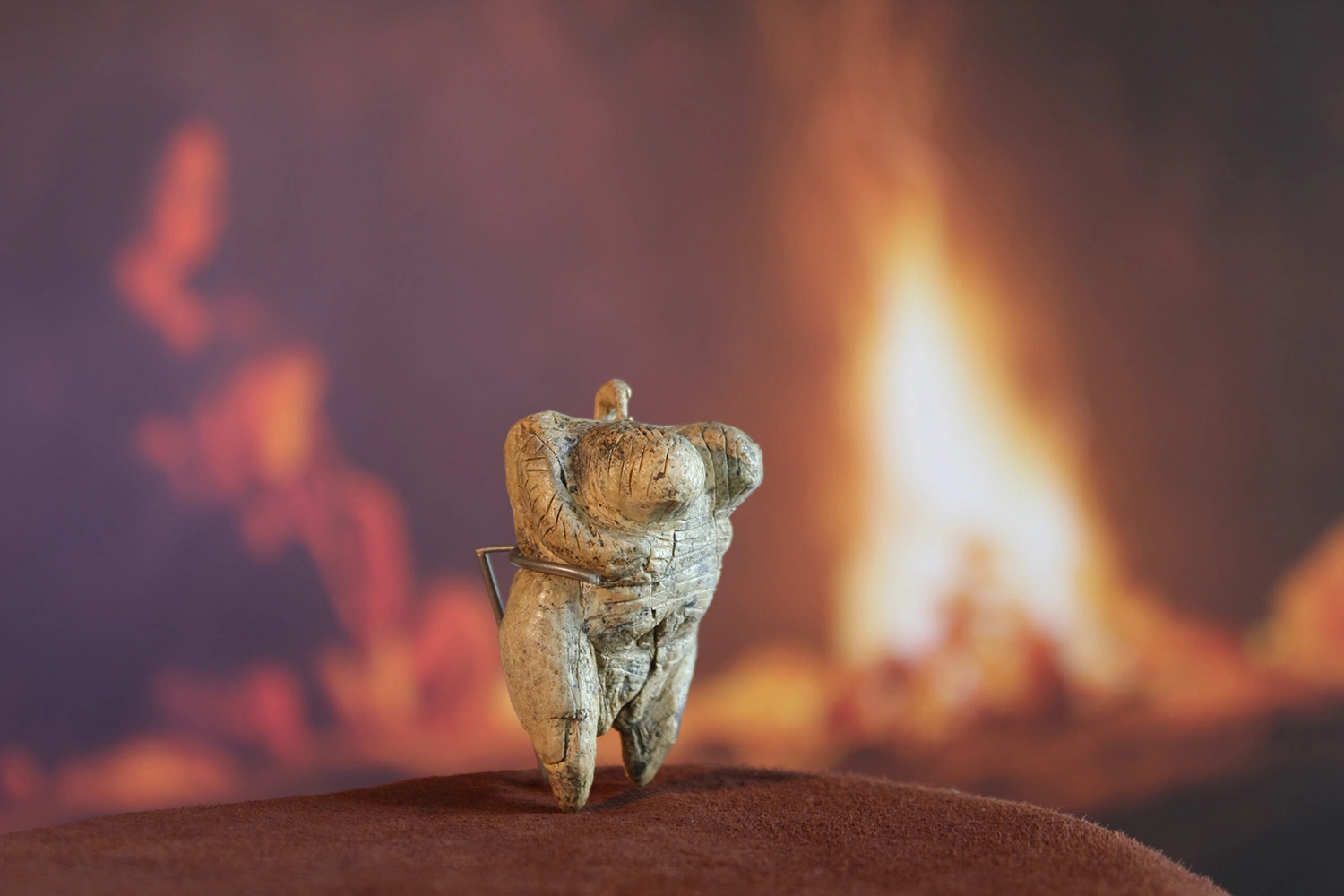
Some 40,000 years ago, people who had migrated from Africa via the Middle East and along the Danube sought shelter in the caves of the Swabian Alb. There, they left behind tools, jewellery and musical instruments. One of the most remarkable finds was a six-centimetre-tall figurine carved from ivory around 40,000 years ago: the Venus of Hohle Fels is considered the oldest known depiction of a human being.‘The cave is a sponge reef dating from the Jurassic period,’ explains Otto Schwabe. He regularly leads groups through Hohle Fels Cave and has met people who return time and again to play the guitar or simply spend time at a place they regard as a special source of energy. Schwabe vividly describes the cave’s geology and explains how organic material, such as the ivory of the Venus of Hohle Fels, has been well preserved in the sediment.
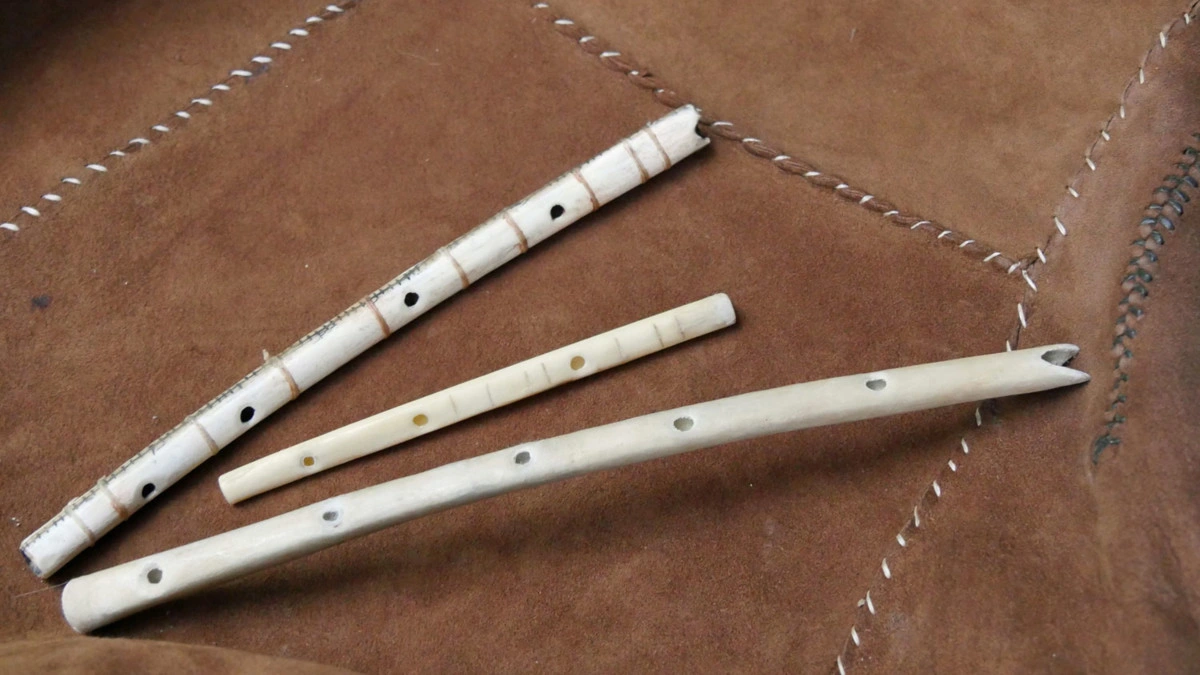
Figure made of mammoth ivory resembles a human and stands in front of a campfire
Masterpieces in bone and ivory
The Ice Age flutes are made from swan wing bones and griffon vulture bones. They are among the world’s oldest known musical instruments.
1 / 2

Ice Age Art in the Ach and Lone Valleys

Treasure Troves of Human History
Hohle Fels Cave was not the only place where works of art and musical instruments lay buried. Alongside Hohle Fels Cave, Geißenklösterle Cave and Sirgenstein Cave are among the most important archaeological sites in the Ach Valley. The Lone Valley, northeast of Ulm, is home to three further major archaeological sites: Vogelherd Cave, Hohlenstein-Stadel Cave and Bockstein Cave. All six archaeological sites have formed part of a UNESCO World Heritage Site dedicated to Ice Age art since 2017. The world’s oldest known flutes were discovered here, along with animal figurines such as the Ivory Mammoth and the Lion Man, a hybrid figure combining human and animal features.Hohle Fels Cave is open to visitors except during the winter months, when bats retreat there to hibernate. Visitors enter along a walkway, beneath which archaeologists excavate deep underground in the hope of making further discoveries. They are unlikely to unearth any sheet music, however. Gabriele Dalferth can therefore continue to give free rein to her imagination – along with audiences captivated by the sounds of the cave.
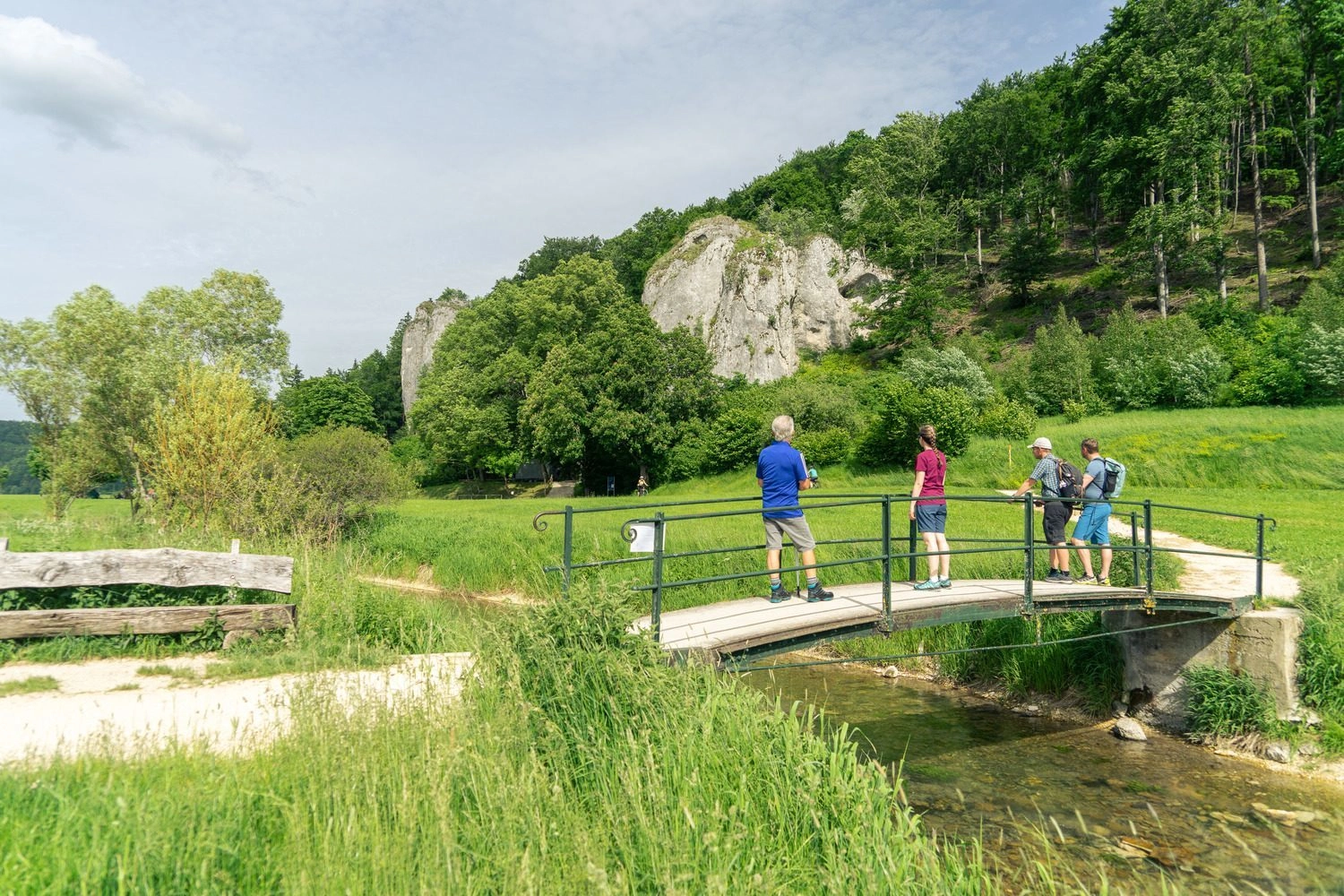
Hikers are standing on a bridge over a small river looking at a rock formation.
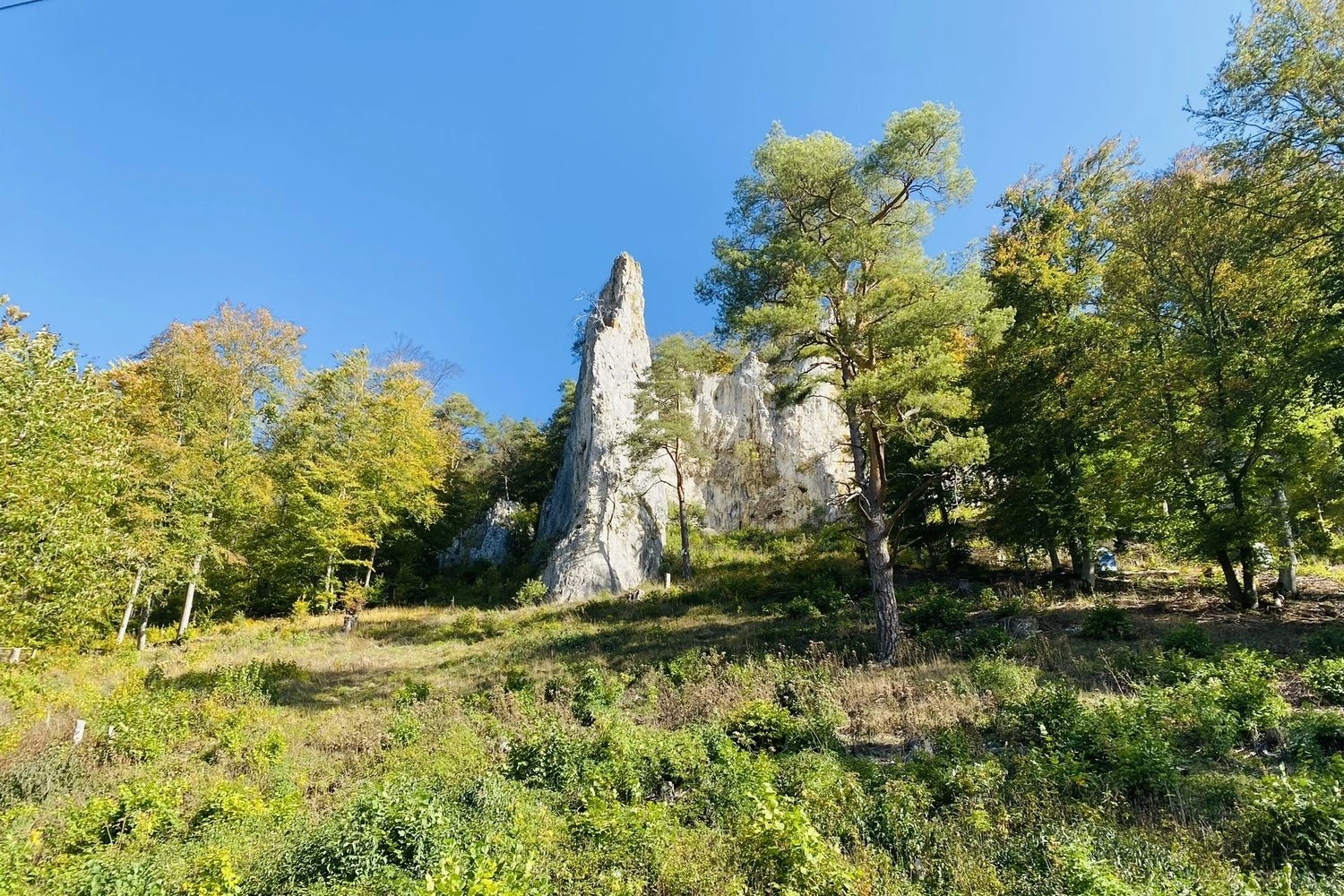
A rock formation in a wooded area.
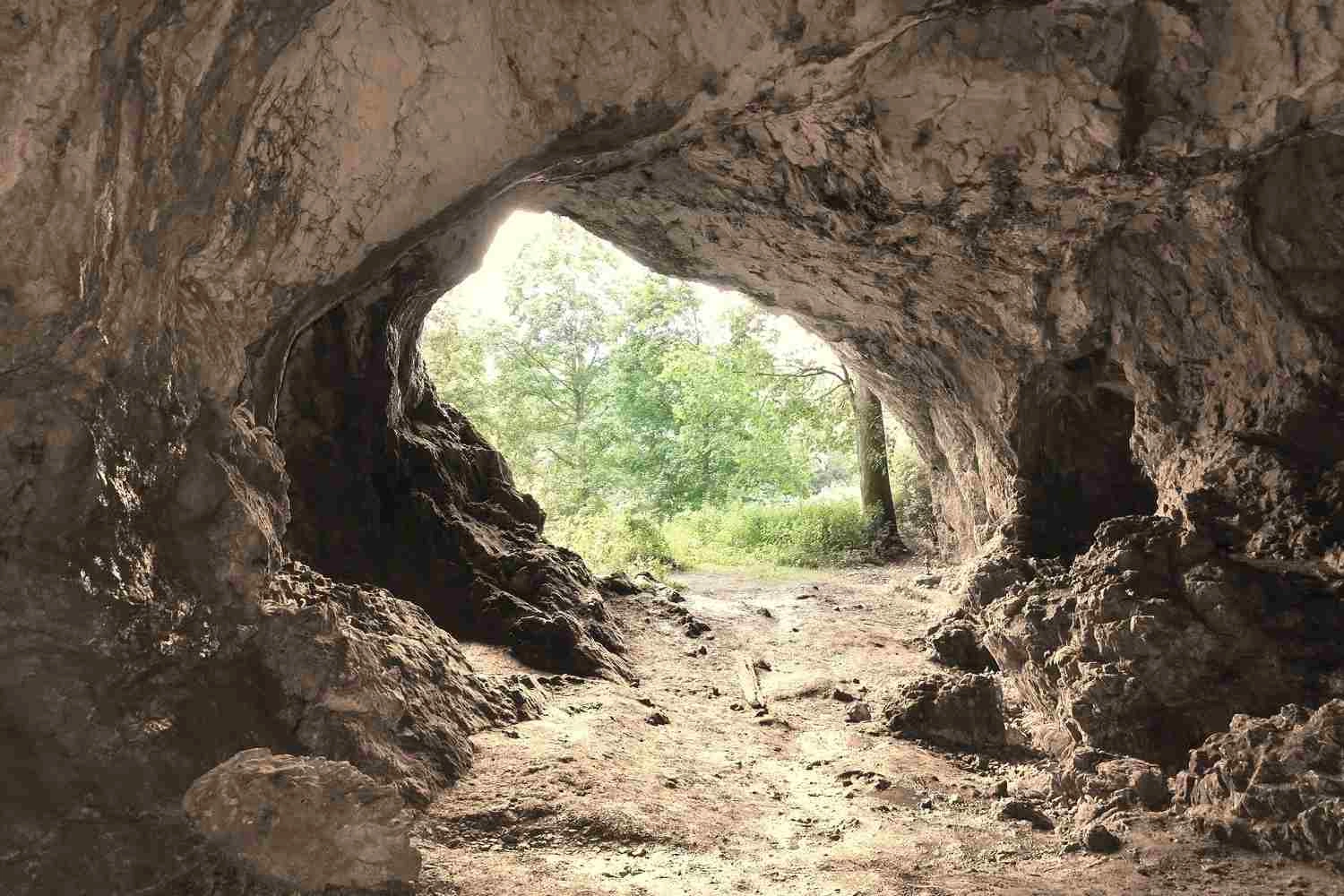
View from inside a cave toward the exit.
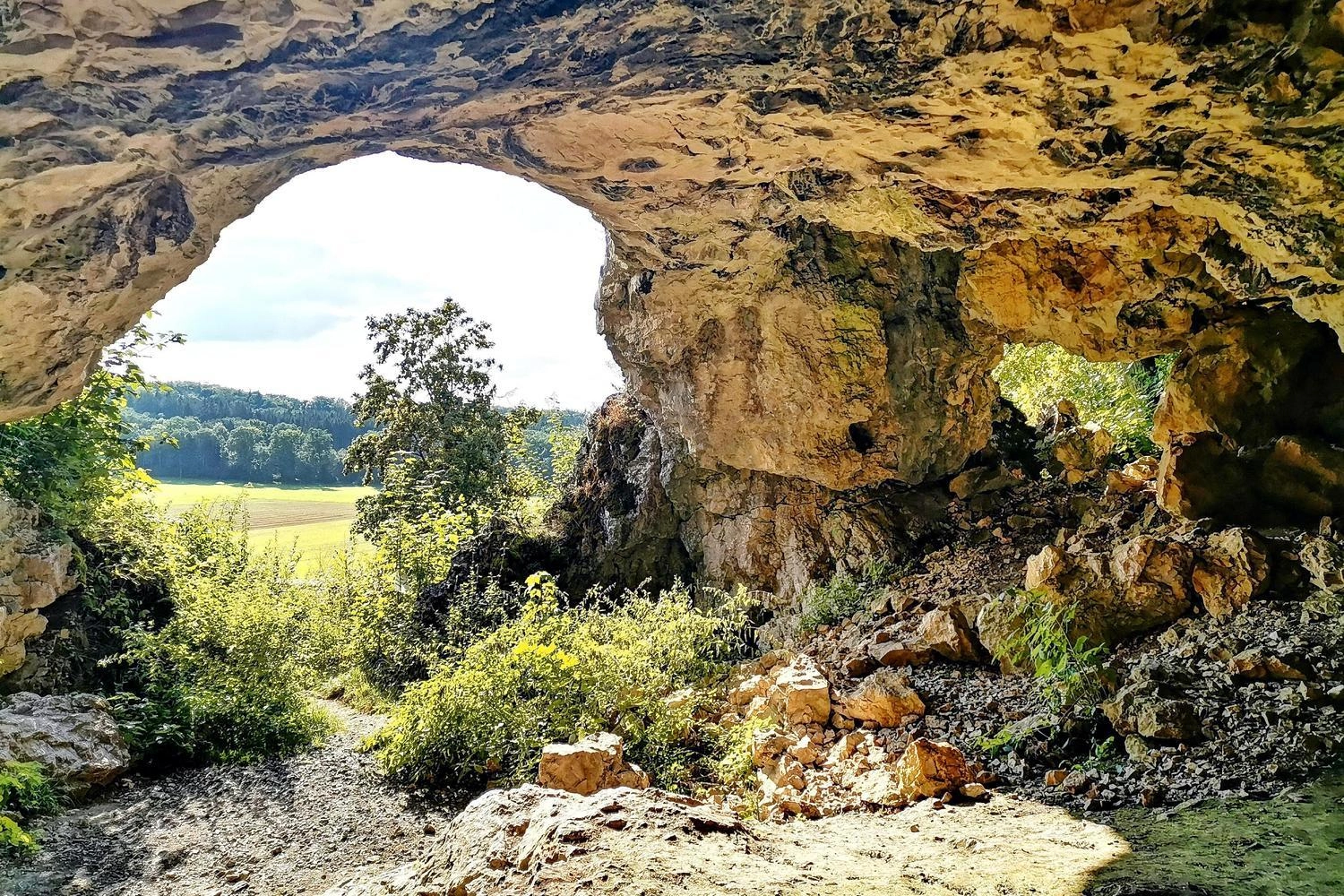
A cave with plenty of light streaming in through its entrance.
Gateway to the Ice Age
From the outside, Hohle Fels Cave in the Ach Valley looks unassuming. Inside, some of the most significant examples of Ice Age art have been discovered.
1 / 4

The Hohle Fels Cave near Schelklingen

Experience an Ice Age Cave
The cave, where the temperature remains at around eight degrees Celsius throughout the year, is located approximately one and a half kilometres from Schelklingen. Information on opening times, guided tours and the Stadtmuseum Schelklingen town museum is available at www.hohle-fels-schelklingen.de/hohle-fels/oeffnungszeiten-fuehrungen.

Visit the UNESCO Ice Age Art World Heritage Sites

Discover Archaeological Sites, Caves and Museums
  • Go to article
    NatureCanyons & Caves
    Archäopark Vogelherd with Vogelherd Cave
    The Vogelherd Cave near Niederstotzingen ranks among the UNESCO World Heritage Site "Caves and Ice Age Art of the Swabian Alb" since summer 2017. Here, Ice Age culture comes alive.
    NiederstotzingenCLOSED
  • Go to article
    NatureCanyons & Caves
    Hohlenstein
    Site of the world-famous 40,000-year-old mammoth ivory figure "Lion Man" and part of the UNESCO World Heritage Site "Caves and Ice Age Art in the Swabian Jura".
    Swabian Alb
  • Go to article
    NatureCanyons & Caves
    Sirgensteinhöhle
    The Sirgenstein is located between Blaubeuren and Schelklingen on the western side of the valley. A mighty rock mass rises above the cave, on which a castle stood in the Middle Ages. The cave is part...
    Swabian AlbCLOSED
  • Go to article
    NatureCanyons & Caves
    Geißenklösterle
    The Geißenklösterle is located south of Blaubeuren-Weiler in the Bruckfels massif above the Ach river. The archaeological layers date back to the Neanderthal period.
    Swabian AlbCLOSED
  • Go to article
    NatureCanyons & Caves
    Hohle Fels
    The Hohle Fels in the Achtal near Schelklingen is one of the largest hall caves in the Swabian Alb. Excavations are still taking place in the Hohle Fels. Probably the most important find is the "Venus...
    Swabian Alb
  • Go to article
    NatureHiking
    Alb-Donau District Ice Age Trail – Ice Age Hunter’s Trail
    A high-quality walking trail in the World Heritage Site. Follow in the footsteps of an Ice Age hunter to Stone Age caves and archaeological sites in the Achtal valley.
    Swabian AlbMedium3h9.3kmLoop tour
  • Go to article
    NatureCycling
    Ice Age Valleys Cycle Route
    The Ice Age Valleys Cycle Route leads through the middle of the UNESCO World Heritage Site "Caves and Ice Age Art of the Swabian Alb". It winds through the picturesque landscapes and unspoiled nature...
    Swabian AlbMedium5:15h74.3kmOne way tour
  • Go to article
    CultureMuseums & galleries
    Urgeschichtliches Museum
    Museum of prehistory Blaubeuren – Where man came into being!
    Swabian Alb
  • Go to article
    NatureHiking
    Alb-Donau-Kreis Ice Age path - Neanderthal trail
    Impressive hiking tour to the Stone Age caves of the Lone Valley and the sites of legendary Ice Age art.
    Medium3h11.9kmLoop tour
  • Go to article
    CultureMuseums & galleries
    Museum of the University of Tübingen MUT Ancient Cultures
    The "Vogelherd figurines" are among the most famous exhibits at the "Museum of the University of Tübingen MUT Ancient Cultures" at Hohentübingen Castle. They are among the oldest works of art known to...
    Swabian Alb
  • Go to article
    NatureCanyons & Caves
    Bocksteinhöhle
    The Bocksteinhöhle is part of the UNESCO World Heritage Site "Caves and Ice Age Art in the Swabian Jura" and freely accessible. Finds from it can be dated back to 50,000 to 70,000 years ago. The Bocks...
    Swabian AlbCLOSED
11 / 11
Go to article
NatureCanyons & Caves
Archäopark Vogelherd with Vogelherd Cave
The Vogelherd Cave near Niederstotzingen ranks among the UNESCO World Heritage Site "Caves and Ice Age Art of the Swabian Alb" since summer 2017. Here, Ice Age culture comes alive.
NiederstotzingenCLOSED
Go to article
NatureCanyons & Caves
Hohlenstein
Site of the world-famous 40,000-year-old mammoth ivory figure "Lion Man" and part of the UNESCO World Heritage Site "Caves and Ice Age Art in the Swabian Jura".
Swabian Alb
Go to article
NatureCanyons & Caves
Sirgensteinhöhle
The Sirgenstein is located between Blaubeuren and Schelklingen on the western side of the valley. A mighty rock mass rises above the cave, on which a castle stood in the Middle Ages. The cave is part...
Swabian AlbCLOSED
Go to article
NatureCanyons & Caves
Geißenklösterle
The Geißenklösterle is located south of Blaubeuren-Weiler in the Bruckfels massif above the Ach river. The archaeological layers date back to the Neanderthal period.
Swabian AlbCLOSED
Go to article
NatureCanyons & Caves
Hohle Fels
The Hohle Fels in the Achtal near Schelklingen is one of the largest hall caves in the Swabian Alb. Excavations are still taking place in the Hohle Fels. Probably the most important find is the "Venus...
Swabian Alb
Go to article
NatureHiking
Alb-Donau District Ice Age Trail – Ice Age Hunter’s Trail
A high-quality walking trail in the World Heritage Site. Follow in the footsteps of an Ice Age hunter to Stone Age caves and archaeological sites in the Achtal valley.
Swabian AlbMedium3h9.3kmLoop tour
Go to article
NatureCycling
Ice Age Valleys Cycle Route
The Ice Age Valleys Cycle Route leads through the middle of the UNESCO World Heritage Site "Caves and Ice Age Art of the Swabian Alb". It winds through the picturesque landscapes and unspoiled nature...
Swabian AlbMedium5:15h74.3kmOne way tour
Go to article
CultureMuseums & galleries
Urgeschichtliches Museum
Museum of prehistory Blaubeuren – Where man came into being!
Swabian Alb
Go to article
NatureHiking
Alb-Donau-Kreis Ice Age path - Neanderthal trail
Impressive hiking tour to the Stone Age caves of the Lone Valley and the sites of legendary Ice Age art.
Medium3h11.9kmLoop tour
Go to article
CultureMuseums & galleries
Museum of the University of Tübingen MUT Ancient Cultures
The "Vogelherd figurines" are among the most famous exhibits at the "Museum of the University of Tübingen MUT Ancient Cultures" at Hohentübingen Castle. They are among the oldest works of art known to...
Swabian Alb
Go to article
NatureCanyons & Caves
Bocksteinhöhle
The Bocksteinhöhle is part of the UNESCO World Heritage Site "Caves and Ice Age Art in the Swabian Jura" and freely accessible. Finds from it can be dated back to 50,000 to 70,000 years ago. The Bocks...
Swabian AlbCLOSED

FAQs: UNESCO Ice Age Art World Heritage Sites

Good to Know Before Your Journey Back in Time