© SMG, Foto: Sarah Schmid
The Limes UNESCO World Heritage Site in Baden-Württemberg
Following in the Footsteps of the Romans Through Southwest Germany
26.8.2026
The Roman frontier known as the Limes is Central Europe’s largest archaeological monument. Of its total length of 550 kilometres, 165 kilometres ran through what is now Baden-Württemberg. A walk across the eastern Swabian Alb from watchtower to triumphal arch, accompanied by a Limes Cicerone guide who brings history to life.
Limes Cicerones – Guided Tours Along the Limes
Exploring with a Roman History Expert
Markus Schmid is a master baker by trade, but in his spare time he loves delving into history. He is particularly fascinated by the Roman Empire – not least because its history can be found virtually on his doorstep. The legendary Limes once passed close to his home near Aalen. Two years ago, he therefore trained as a Limes Cicerone. These guides receive specialist training from the German Limes Commission and the Archaeological State Museum of Baden-Württemberg. Since then, he has been leading visitors along the ancient frontier that once marked the outer boundary of the Roman Empire.

© Verein Deutsche Limes-Straße, Foto: Erik Dobat
Where the empire stood guard
Walls, gates and towers reveal how the Romans protected their frontier with unconquered Germania.
The Limes Near Rainau in the Eastern Swabian Alb
The Mystery of the Legendary Devil’s Wall
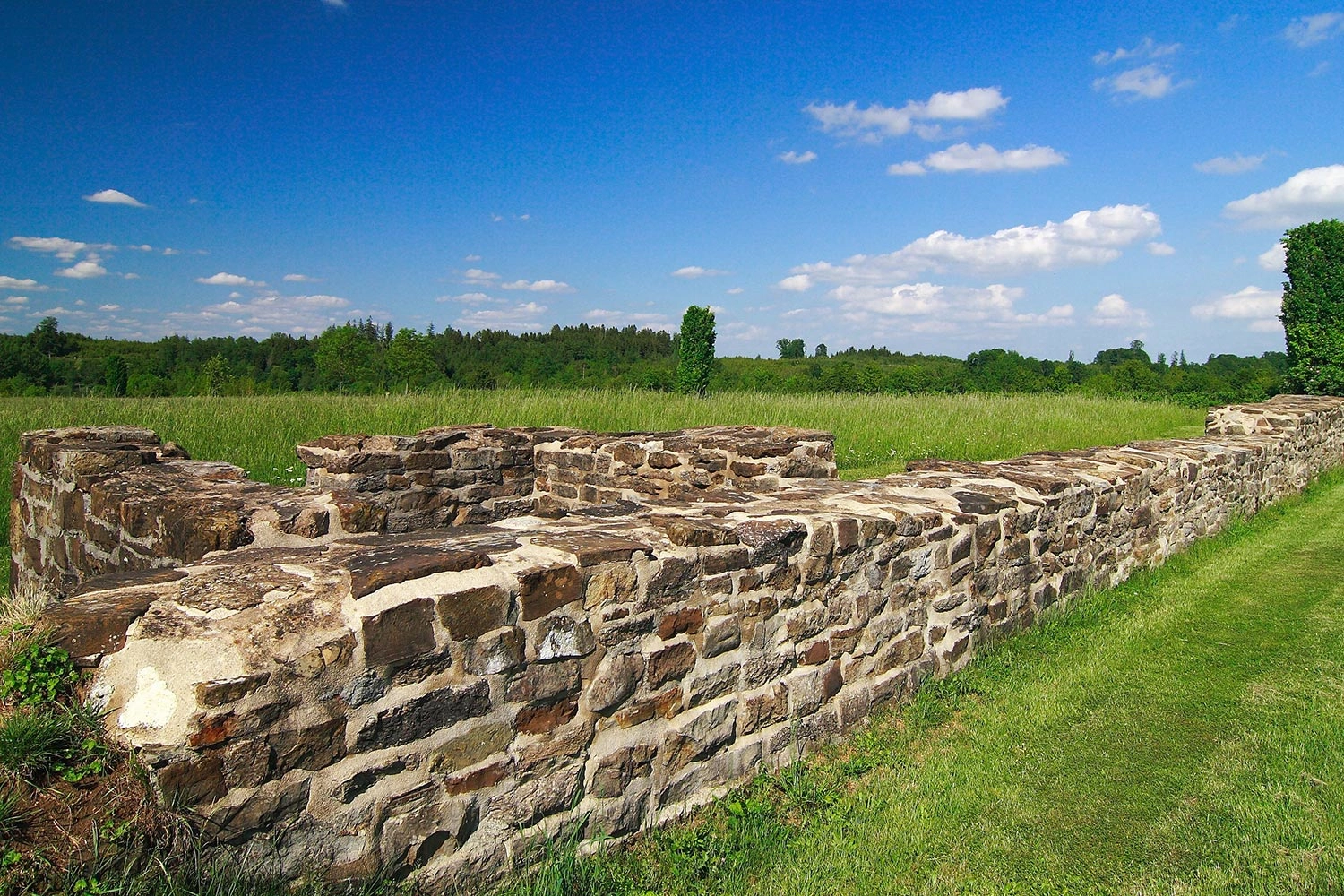
The walk begins at an unassuming car park between Rainau-Buch and Schwabsberg. The Limes once ran straight through this spot. But where exactly? “Come with me,” says Markus Schmid, leading his guests into a dark stretch of woodland. Suddenly, a substantial wall appears among the trees. One metre thick and three metres high, it represents the Limes as it looked almost 1,900 years ago, when Rome began fortifying its frontier with stone walls.This section is a reconstruction, built on the original site and largely in accordance with archaeological findings. Reconstructions are essential if visitors are to gain an impression of the Limes today. By the 19th century at the latest, many of its once imposing walls had been dismantled or levelled. In earlier times, people feared the remains and even called them the Devil’s Wall.
© Verein Deutsche Limes-Straße, Fotografie: Michael Schneid
© Andreas Steidel
© Andreas Steidel
Mahdholz Limes Tower Near Rainau
The View of a Roman Frontier Soldier
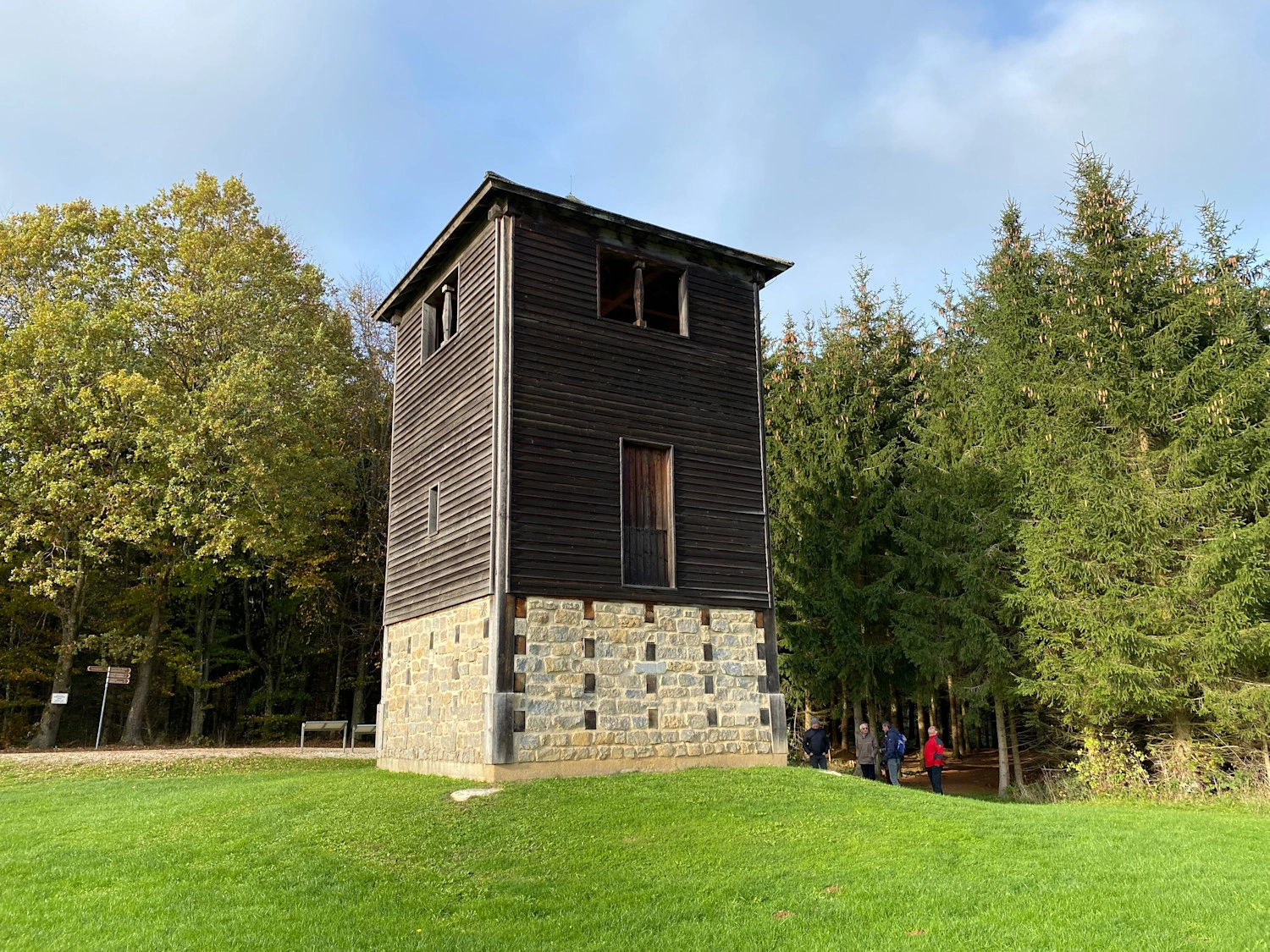
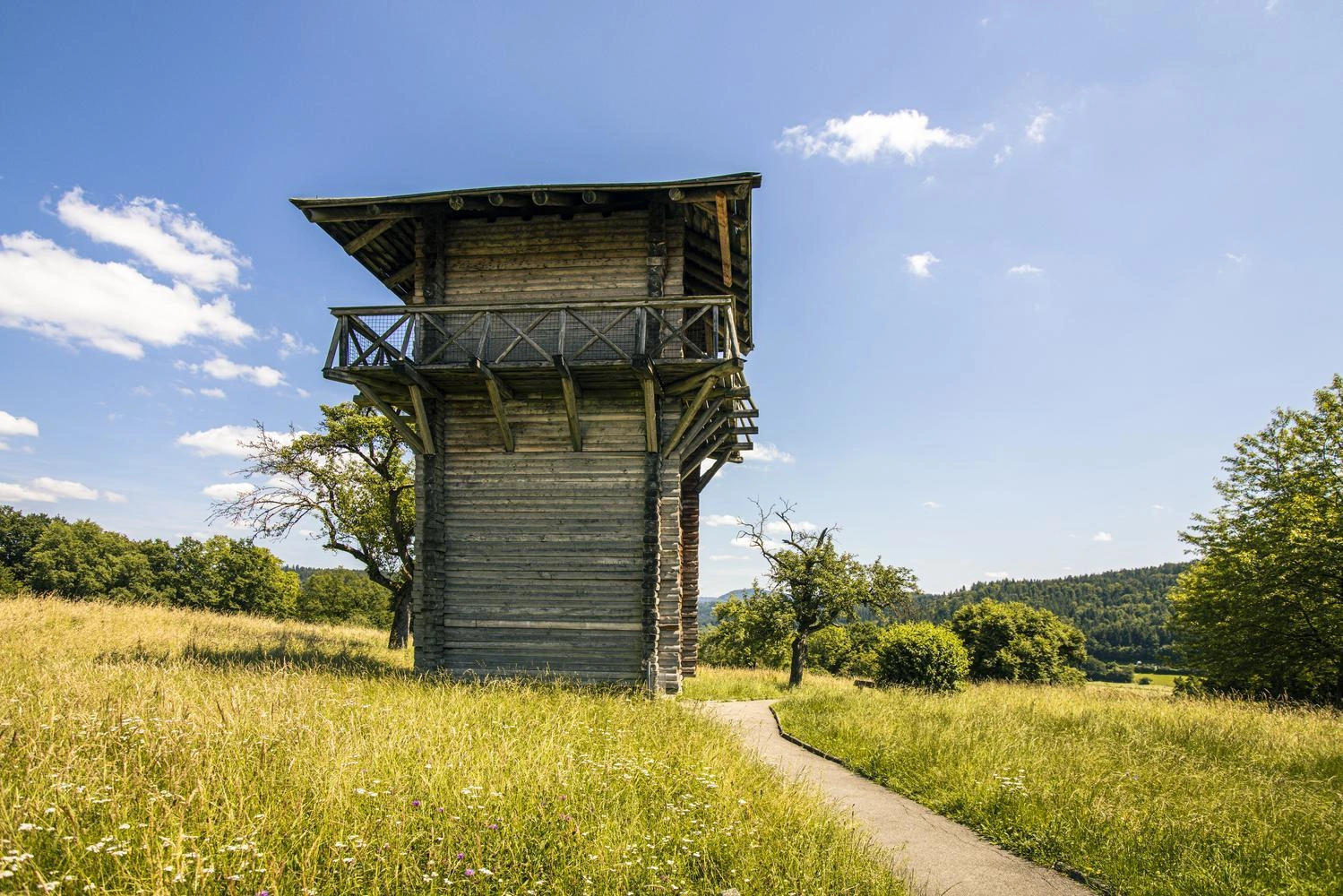
It helps to have someone who knows exactly what is a reconstruction and what is genuinely original. The large watchtower in the Mahdholz woodland is also a reconstruction. Rising majestically at the edge of the woods, it is a stone monument topped with a wooden structure. Markus Schmid is full of enthusiasm for it. “The finest reconstructed tower in Raetia,” he says. Raetia was the name of the Roman province that once extended from Lorch to Regensburg, with Germania Superior to the north. The Limes ran through both provinces, and the Upper German-Raetian Limes was inscribed on the UNESCO World Heritage List in 2005.The Mahdholz watchtower is probably very close to how a Limes tower would actually have looked. Only the ground-floor door is a concession to modern times. “Originally, the tower was entered by a ladder at first-floor level,” explains Limes Cicerone Schmid. He also has the key and takes his group to the top, where four legionaries were once stationed: two slept while two stood guard.The views are magnificent, stretching across the eastern Swabian Alb and its ridge, fields and forests. For the Romans, of course, this was not sightseeing but surveillance. From here, they could keep watch over the frontier and see the next watchtower 200 metres away, communicating with it by light and smoke signals.
© Andreas Steidel
© SMG, Foto: Sarah Schmid
© Andreas Steidel
Rainau Limes Trail
The Limes: Both Frontier and Meeting Place
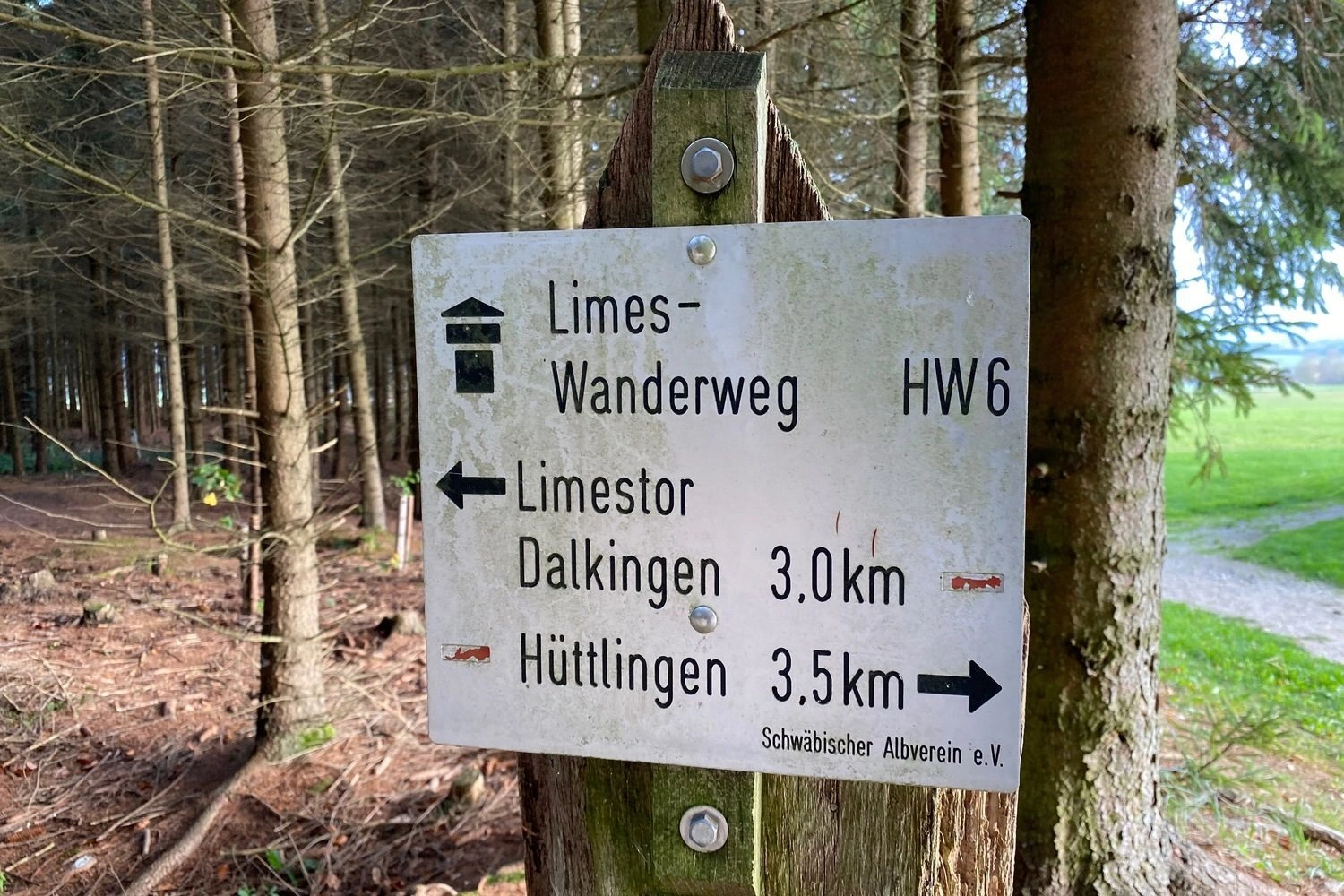
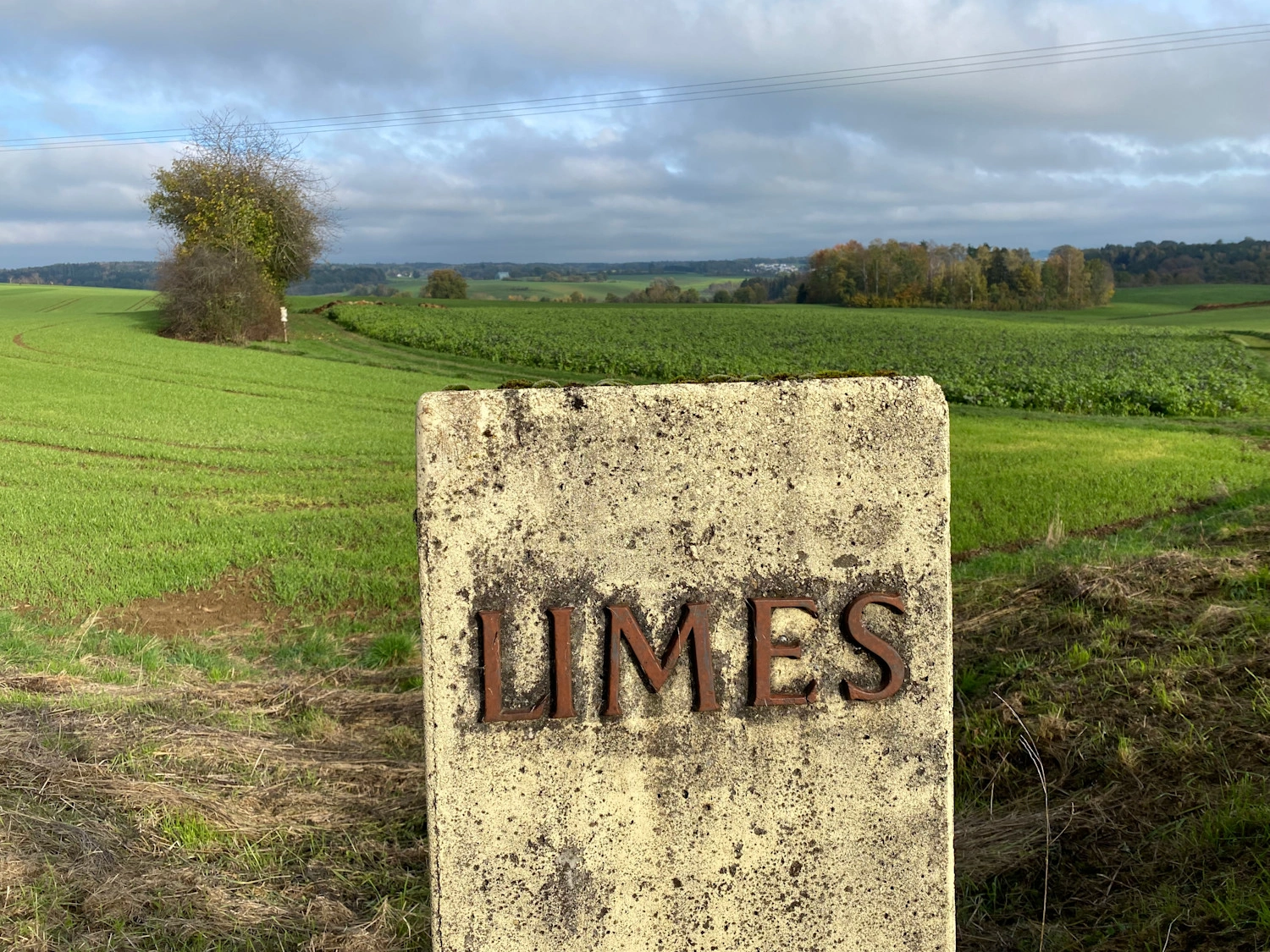
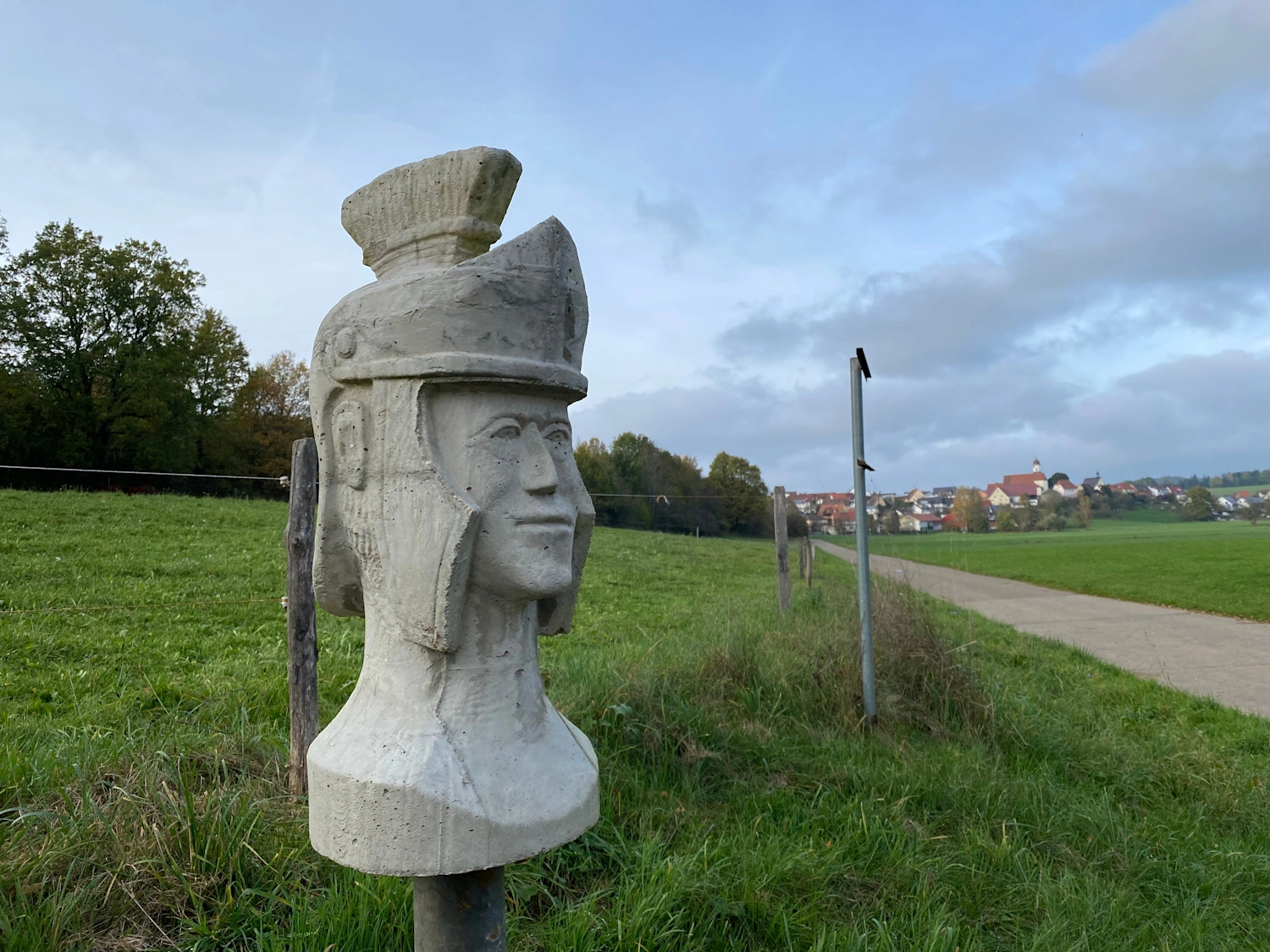
Wild Germania! Markus Schmid now invites his guests to join him for a short walk along the Limes Trail. Life here was not always as peaceful as it is today, but nor was there the constant conflict that some might imagine. “The Limes was not really a defensive wall, but rather a physical barrier marking the course of the frontier,” the guide explains.The gates therefore generally remained open, and trade flourished. Bearskins and blonde women’s hair were exchanged for bronze and silver coins. Roman currency was highly prized and accepted throughout the Empire. It was a kind of dollar of the ancient world, eclipsing all local forms of barter.The trail follows fields and rivers. Here in the eastern Swabian Alb, distinctive centurion heads mark the route at intervals. The municipality of Rainau has created an extensive Limes Park and an eleven-kilometre circular walk linking the most important Roman sites along the Limes.The highlight of the route is the Limes Gate in Dalkingen, around three kilometres from the Mahdholz watchtower. On the way, the trail crosses the Jagst Valley, with the picturesque village of Schwabsberg in the background. The Romans built their frontier right across the landscape; only the Rhine and Danube formed natural boundaries.
© Verein Deutsche Limes-Straße
© Andreas Steidel
Dalkingen Limes Gate – UNESCO World Heritage Site
Caracalla’s Triumphal Arch in the Swabian Alb
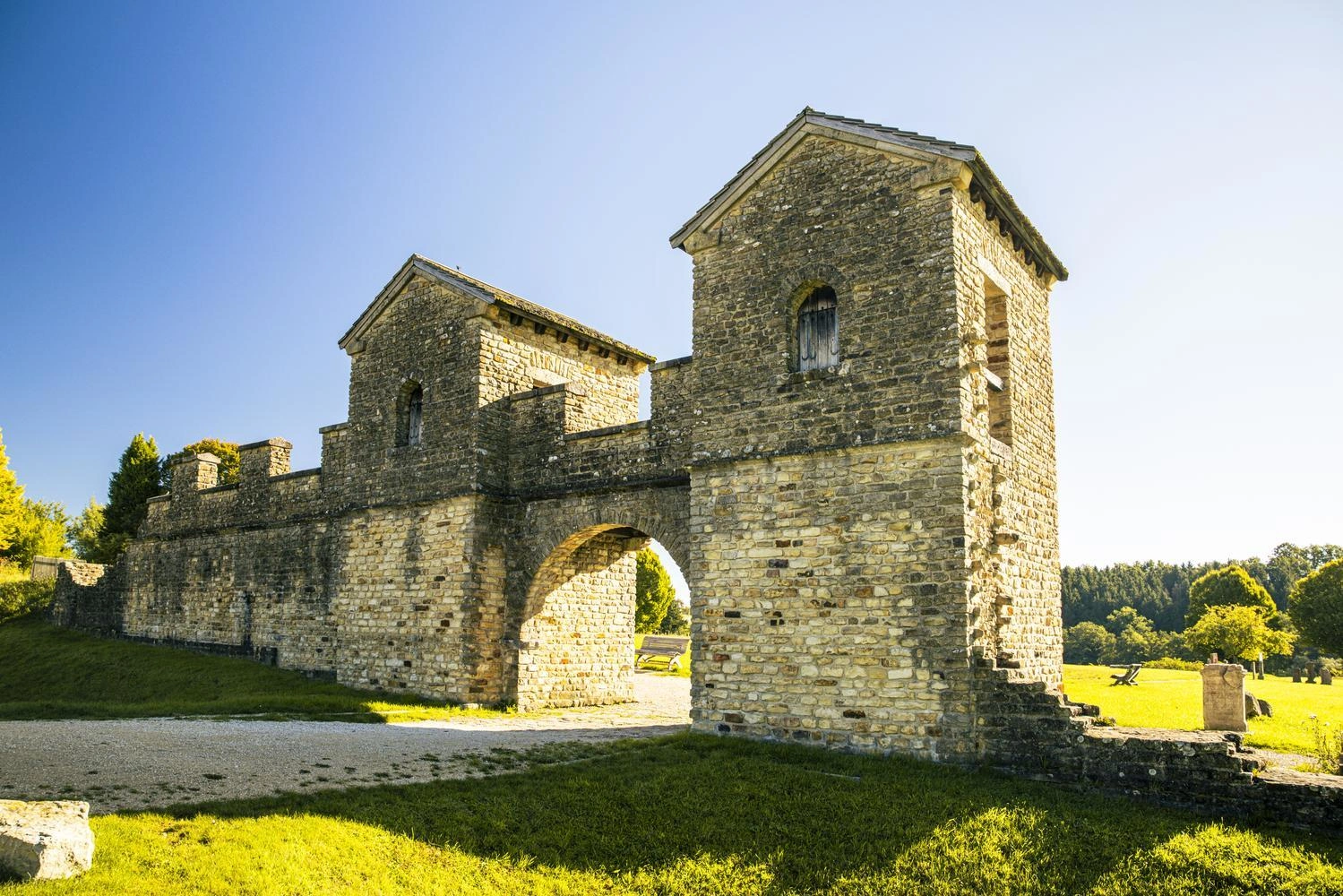
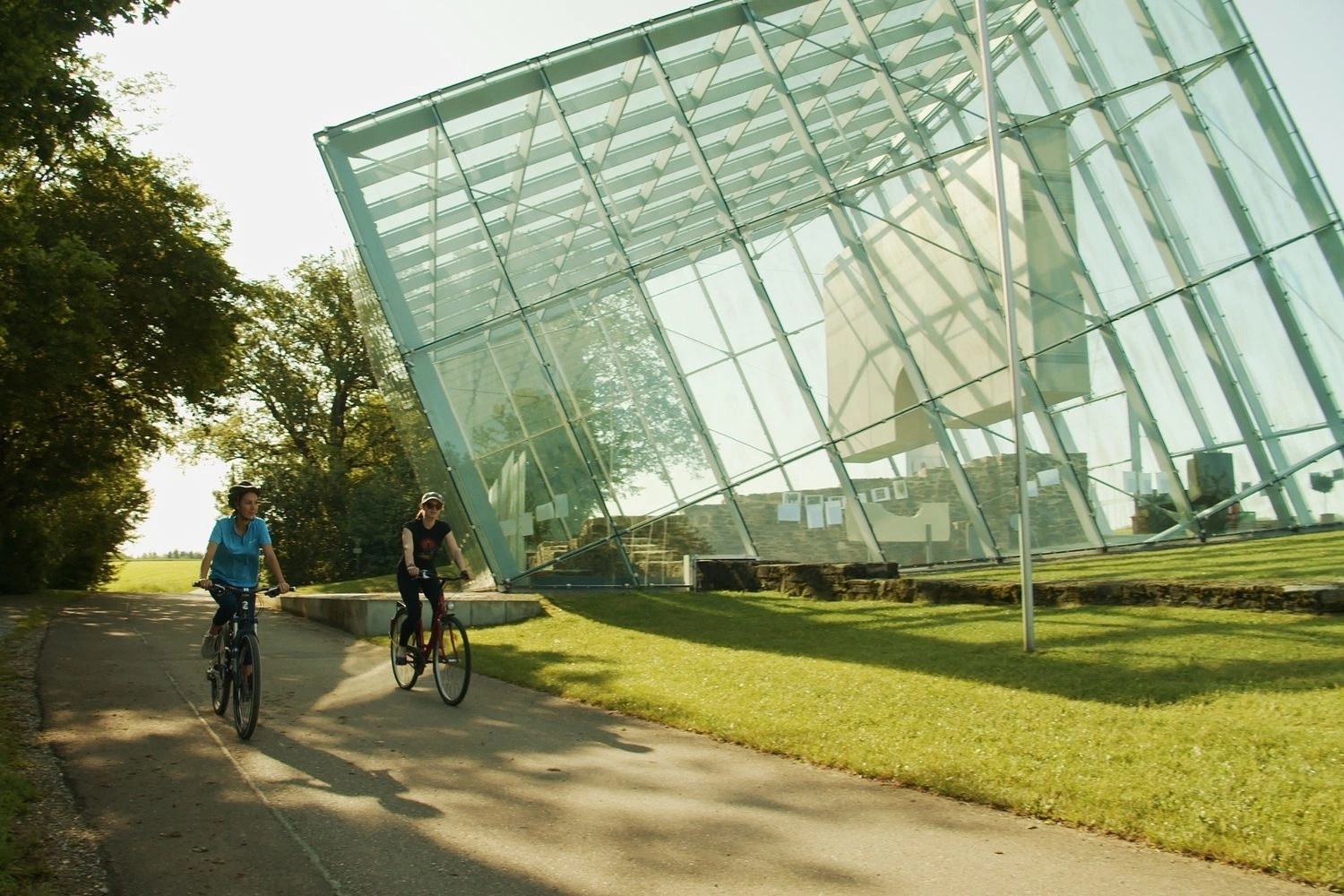
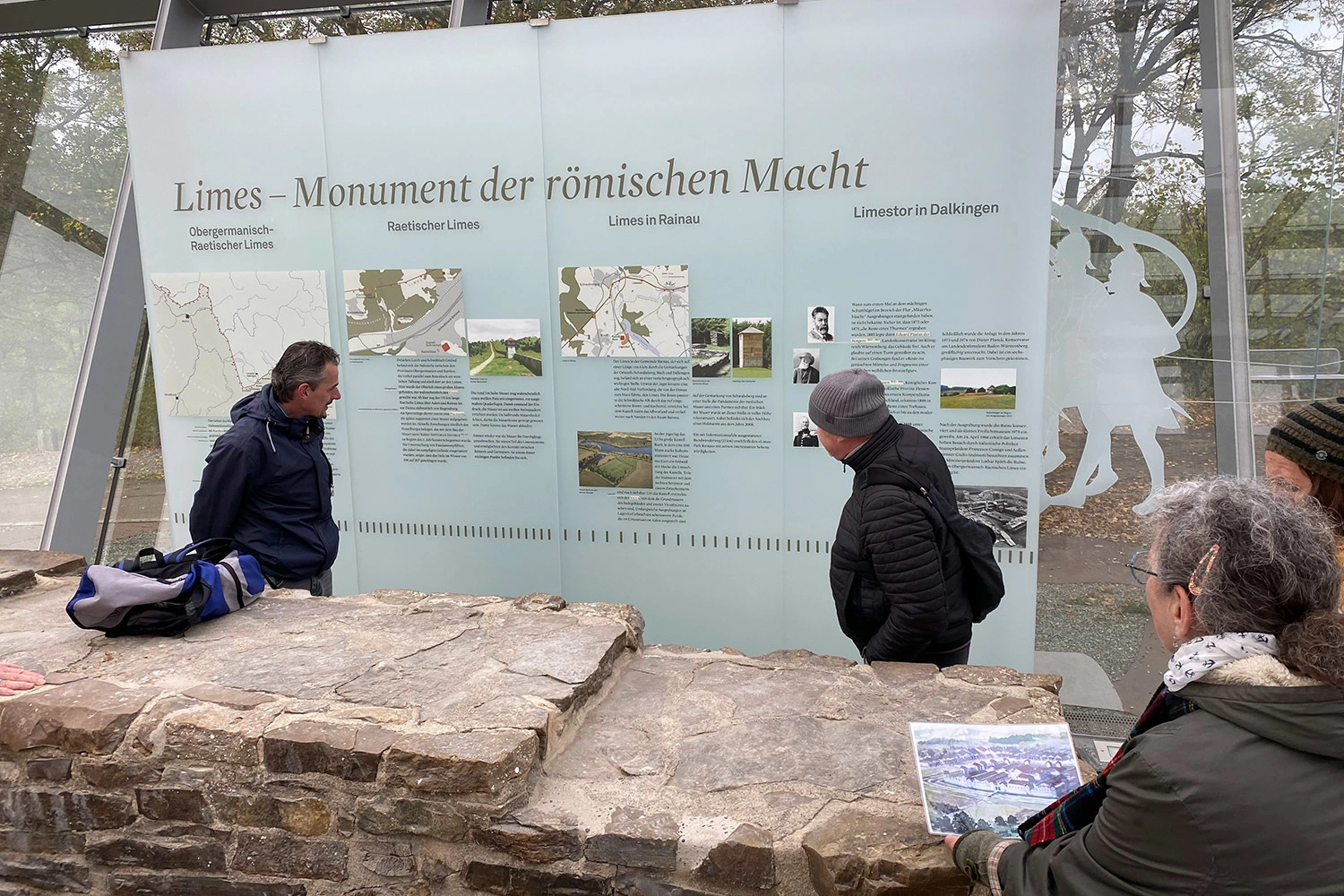
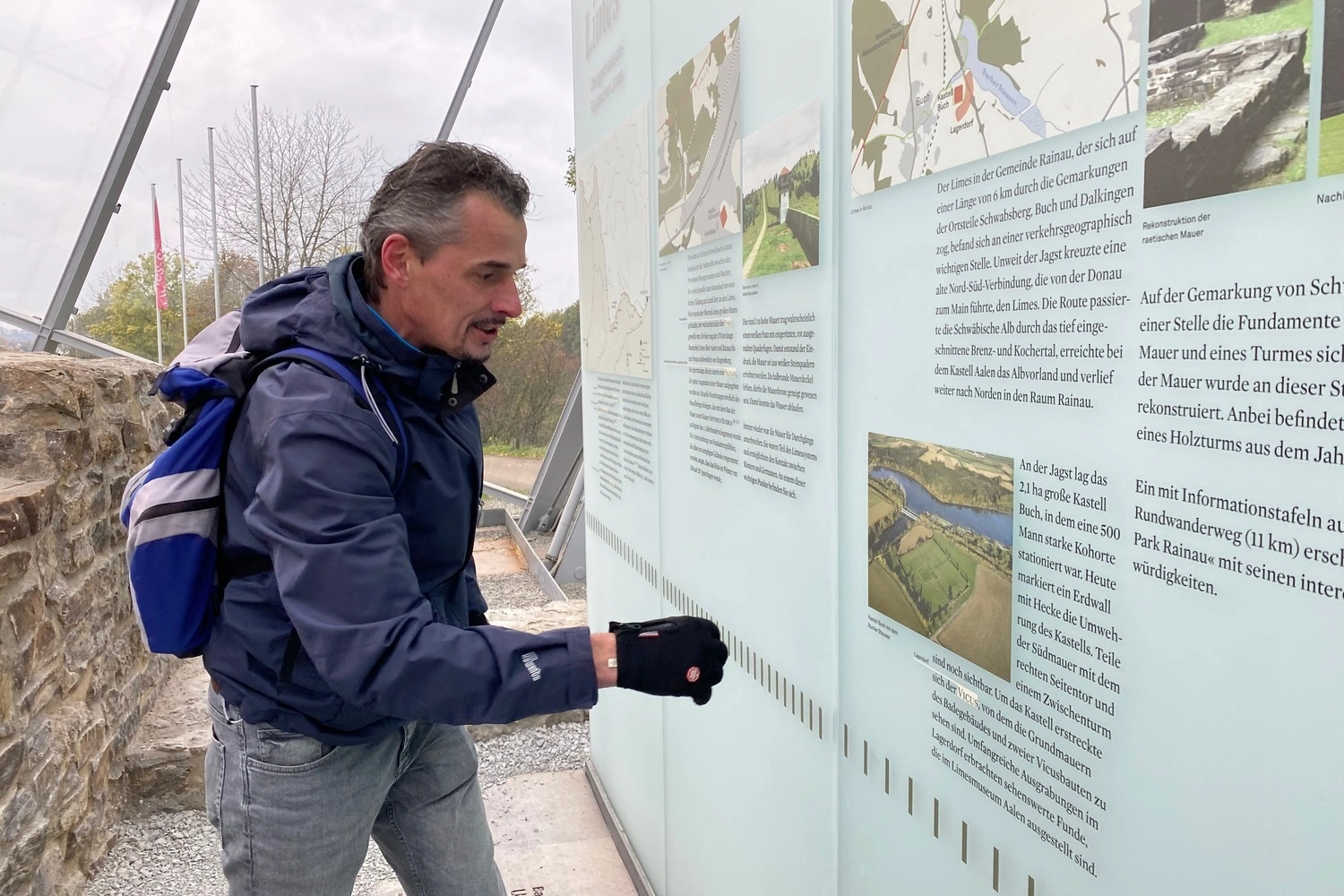
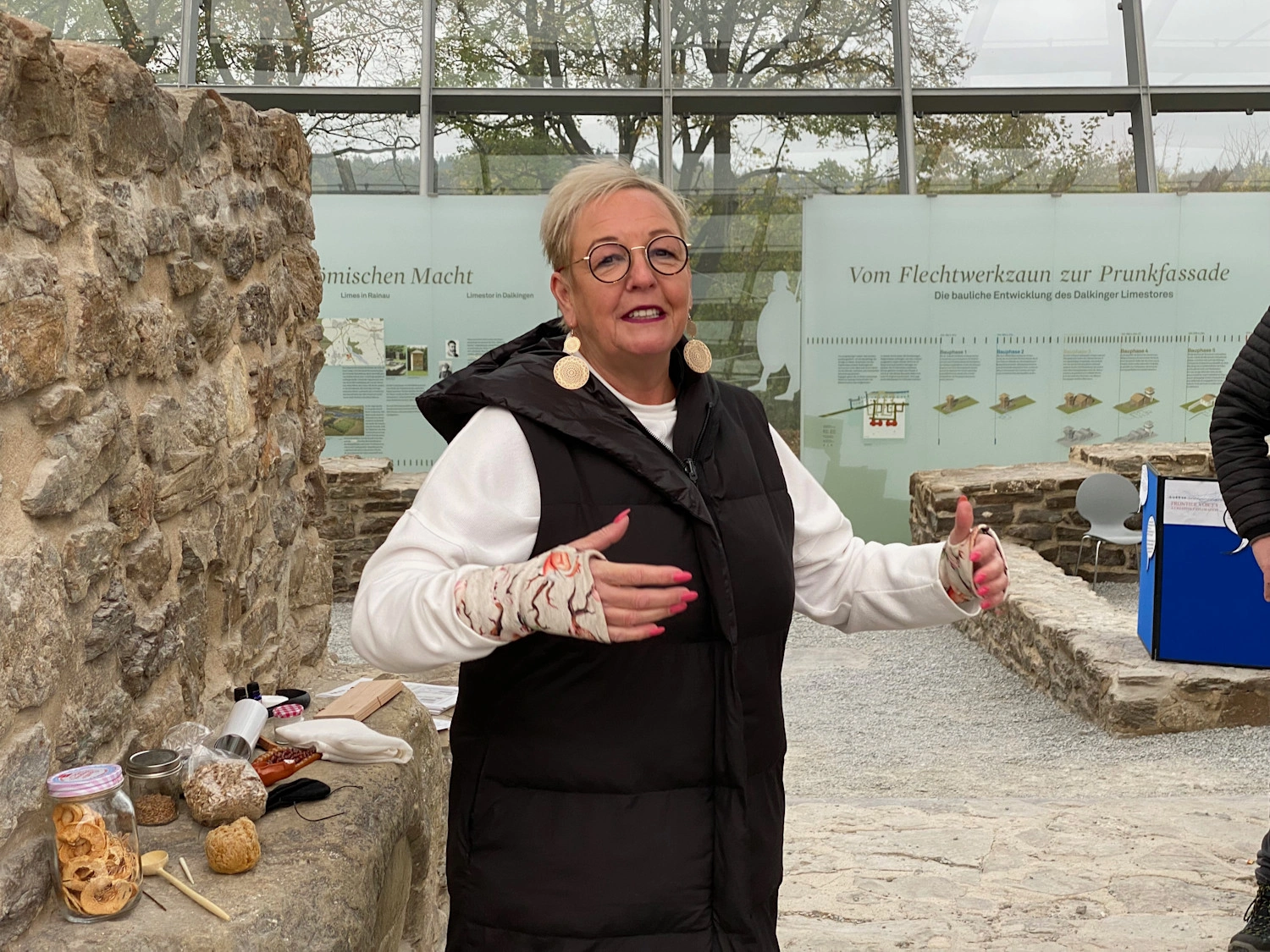
The sight of the sloping plastic cube is puzzling. An art installation in the countryside? An open-air studio designed by an ambitious architect? In fact, this light-filled modern structure is simply the protective enclosure surrounding the Dalkingen triumphal arch.The Dalkingen Limes Gate is truly unique. Originally, it was merely one of many crossing points along the Limes: a plain wooden structure like the others. But then Emperor Caracalla came here and defeated the defiant Germanic tribes in AD 213. To commemorate his victory, he commissioned a monument and triumphal arch – a magnificent gateway unlike any other along the Limes.Here, Markus Schmid meets fellow Limes Cicerone Sonja Heinen. Dressed in Roman attire, she works at the site, as the Limes Gate is now a museum. Its remains were excavated in 1973, and the protective enclosure was erected in 2010. Beneath it, fabric panels recreate the gate in its original dimensions.
© Andreas Steidel
© Andreas Steidel
Everyday Roman Life Along the Limes
Rose Water, Roman Baths and Gossip
Sonja Heinen now invites her guests on a sensory journey into the world of the Romans. They brought many things to the region that we still enjoy today – apples, for example, as well as parsley and caraway. Their fragrances were captivating. Guests can smell lavender and rose water while imagining what wellness was like almost 2,000 years ago.Roman toilet habits, however, take a little getting used to. People sat together in a communal setting to relieve themselves. Afterwards, they cleaned themselves with a sponge soaked in vinegar before heading to the baths.Between AD 250 and 300, this way of life also came to an end. Germanic tribes and the Alemanni overran the Limes, and the Roman Empire began to retreat before eventually collapsing altogether. It is a gripping tale from the ancient world, narrated by a Limes Cicerone who takes us on a fascinating journey back in time in the eastern Swabian Alb.
FAQ About the Limes in Baden-Württemberg
What You Need to Know About the Limes