© Stadt Münsingen
Press Release
Forgotten Spaces
by State Tourist Board Southwest Germany
The Lost Places of Baden-Württemberg
Ghost Hotels, Restricted Areas, and Castle Ruins – Fascinating Lost Places in Southwest Germany
STUTTGART – They lie silent and mysterious, slowly being reclaimed by nature yet rich with captivating tales of times gone by - Baden-Württemberg is home to countless forgotten landmarks. Whether open to visitors or admired from afar, these witnesses to the past promise a journey back in time with every crumbling wall and faded façade.
A Ghost Hotel in the Black Forest: Kurhaus Sand
Nestled below the Mehliskopf, a modest mountain refuge blossomed in the late 1+9th century into an exclusive Swiss-style retreat - complete with its own ski lift. Once the playground of the elite, Kurhaus Sand's golden era faded with time and it is now considered one of the region’s most fascinating lost places. Today, traces of the hotel's past grandeur remain with much of the interior still intact. On weekends, a non-profit association opens its doors to curious visitors, offering specialist tours and a unique glimpse into the past. Additional historic insights are also available from the areas Cultural Heritage Association.sites.google.com; kulturerbe-schwarzwaldhochstrasse.deSecrets of the Restricted Area: Albgut Münsingen and the Village of Gruorn
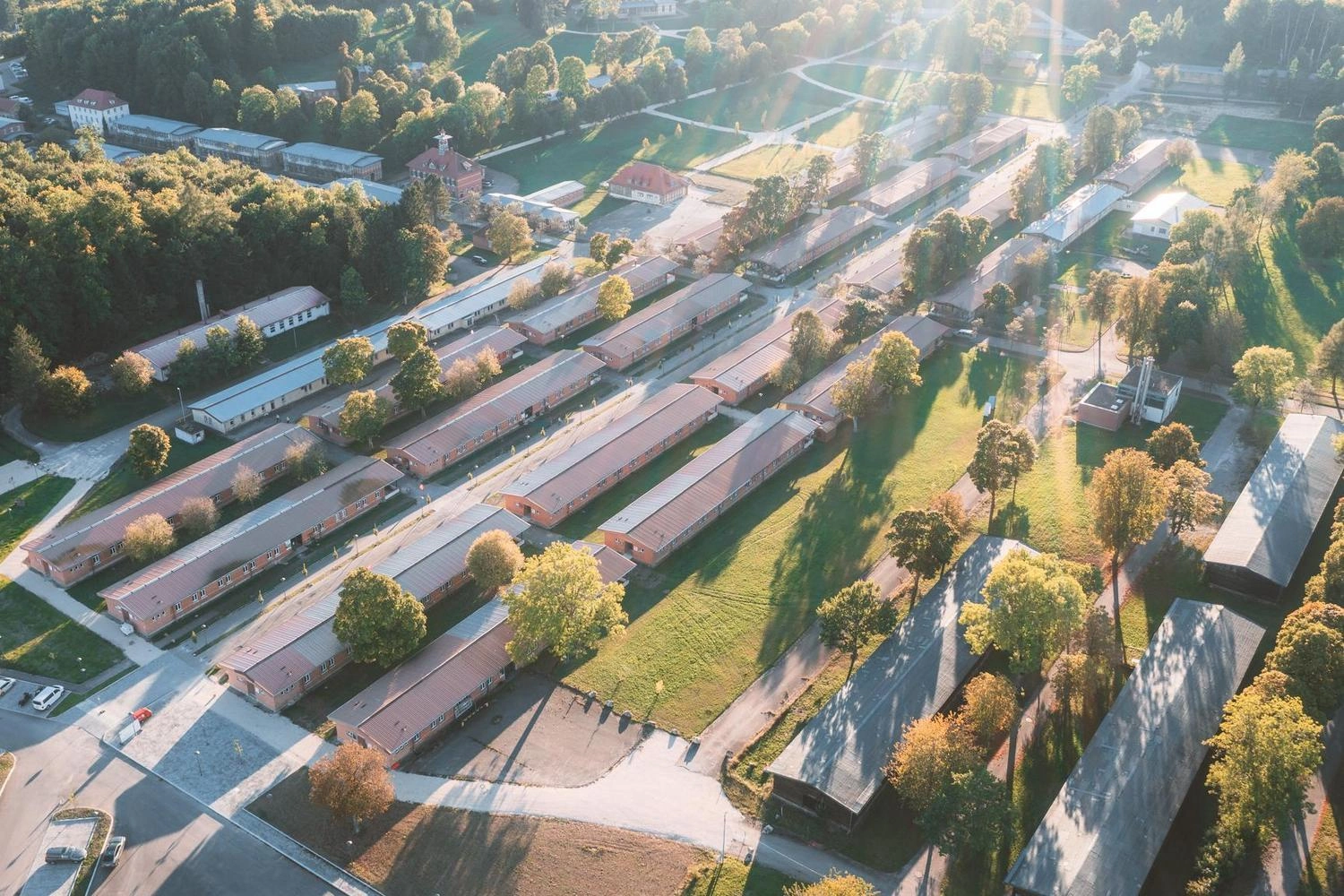
Once off-limits to civilians, the former military training area near Münsingen is today one of Baden-Württemberg’s largest unspoilt natural landscapes. Decades of restricted access has not only preserved the wildlife and scenery, but also remnants of history, including the abandoned village of Gruorn. Its church, cemetery, and old schoolhouse - all accessible only on foot or by bike - bear witness to the fate of the village’s former residents. Visitors can learn more about their story from information boards and a small museum housed in the former schoolhouse, where refreshments are available, as well as at the nearby, historic 'Altes Lager', or Old Camp, where the former troop accommodation has been reborn as the Albgut. Other beautifully restored buildings are now home to hotels, restaurants, workshops, and event venues - yet in the site’s quiet corners and the atmosphere of the past still lingers.gruorn.info; albgut.deRenaissance Ruins in Kraichtal: Menzingen Moated Castle
Menzingen Moated Castle bears witness to a dramatic past. Originally built in the Middle Ages as a Gothic-style moated fortress, it was destroyed by rebels during the Peasants’ War. In the decade between 1529 and 1539, Knight, Peter von Mentzingen, rebuilt it as a Renaissance residence across three wings and over three storeys. Legend tells of a young stonemason - who was previously involved in the castle's destruction - being granted a pardon in exchange for leading its reconstruction. His distinctive stonemason’s mark can still be found throughout the building. Severe bombing in 1945, again, reduced the castle to ruins - but also revealed traces of the original medieval walls. Today, the castle is privately owned and closed to the public, but a nearby rest area offers both excellent views and insightful information boards for visitors.kraichgau-stromberg.deMarienwahl Palace near Ludwigsburg: A Hidden Royal Retreat
Hidden away from the lively streets of Ludwigsburg, the tranquil remains of Marienwahl Palace tell a story of grace and quiet grandeur. Built around 1824 by architect Ludwig Abel for General Ferdinand von Varnbüler, the classicist estate later became a royal retreat. Prince Wilhelm of Württemberg and his family sought rest here from 1878 until his coronation in 1891, expanding the property with a stud farm in the 1880s. Princess Pauline of Wied, who later bred horses on the grounds, was laid to rest there to be near her beloved animals. Visitors today can still explore her grave and the ruins of the stables - a serene blend of nature, history, and a royal past.travel.ludwigsburg.deArtistic Ruin in the Green U: Villa Moser, Stuttgart
Once the stately home of Stuttgart’s chocolate pioneer Eduard Otto Moser, this Renaissance-style villa was built in the 1870s in the picturesque Leibfried Garden by architect Johann Wendelin Braunwald. After being reduced to rubble in an air raid in 1944, the remains were given new life during the 1993 International Horticultural Exhibition and incorporated into the 'Green U' - Stuttgart’s celebrated network of connected parks stretching from the palace gardens to Killesberg Park. Today, architect Hans Dieter Schaal’s 'Kunststation Villa Moser', uses walkways and art installations to make the ruins and gardens accessible once more so visitors can experience the harmonious blend of art, architecture, and nature.villa-moser.deEnchanting Resting Place: Dätzingen Castle
Once a brotherhood house of the Order of St. John, Dätzingen Castle today dominates the heart of Grafenau’s Dätzingen district. Nearby lies the castle’s lesser-known cemetery, where several notable personalities rest in peace. Although an information board marks the historic site, it often goes unnoticed by visitors, yet it is well worth a visit: the old aristocratic burial ground lies within what was once a grand English-style park. Centuries ago, guests strolled through the gardens, enjoyed open-air performances, and attended plays and operas performed from a small island stage within the ornamental pond. The Dätzingen Castle Association is dedicated to the areas' preservation and restoration and warmly welcomes visitors.gemeindegrafenau.deA Place of Pilgrimage & Peace: Denkendorf Crypt
Located in the district of Esslingen, Denkendorf Monastery has been known for centuries as 'Little Jerusalem'. Built around 1200, the Romanesque church of St. Pelagius hides a unique relic beneath its floors: in the vaulted crypt, a stone-framed opening marks a symbolic representation of the Holy Sepulchre. Founded by the Canons of the Holy Sepulchre in Jerusalem, a visit to Denkendorf was, in Medieval times, considered equivalent to a pilgrimage to the Holy Land - and it still radiates a deep sense of devotion today. Its centuries-old frescoes and carvings tell of divine battles between good and evil, conjuring up an otherworldly atmosphere for visitors.denkendorf.deForgotten Water World: Baienfurt Nature Pool
Once alive with the laughter of children and the scent of sunscreen, Baienfurt's nature pool in Ravensburg is now overgrown with moss and surrounded by birdsong. Documented as a spa as early as the 15th century, it became a popular water park and event venue in the 1920s. Since its closure in the mid-1970s, the buildings have gradually fallen into disrepair, with the main hall lost to a fire in the 1990s. Nature has now reclaimed the site. Entry is still prohibited, however plans are underway to revive the historic location as a hotel and restaurant. In the meantime, the location is still gaining attention: in 2025 scenes from the TV series 'Die Toten vom Bodensee', or The Dead of Lake Constance, where filmed here. NOTE Many of Baden-Württemberg’s lost places are either privately owned or secure sites. Visitors are asked to respect all access restrictions. And even entry to accessible sites is undertaken entirely at one’s own risk, so caution is advised.Download the text as a Word file:Download the text as a PDF file:Media contact